WINDOWS


Date added: 07.11.26
Blinds for living rooms in series 104
Blinds for living rooms in series 104
Introduction
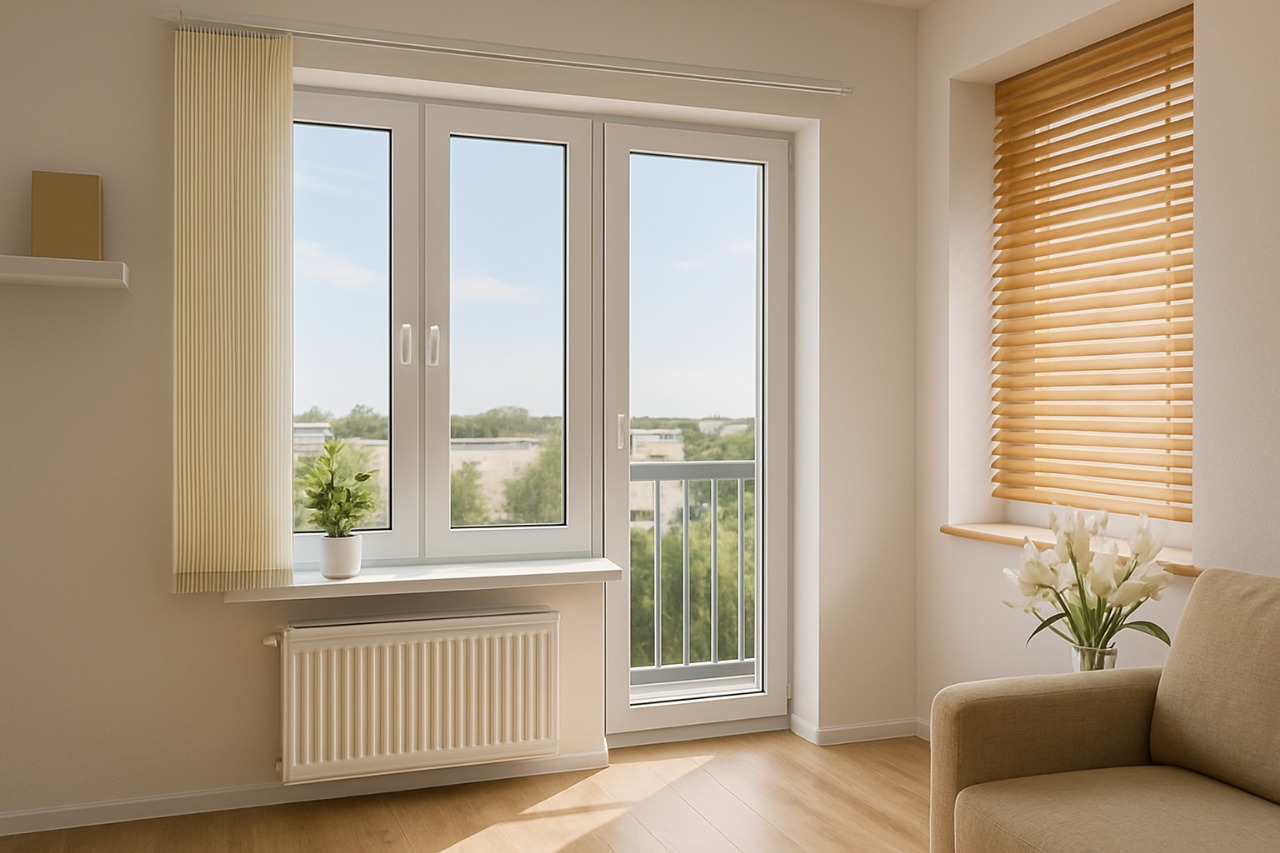
Living rooms in typical series 104 apartments have specific window proportions: rectangular frames, modest sills and often direct daylight. The right blinds improve comfort, control light and ensure privacy without overpowering the interior. This guide explains which blind types work best for a series 104 living room, how to choose materials and colors, how to measure windows and what accessories to consider.
Windows in series 104 — key points
- Windows are usually rectangular with a wide glass area.
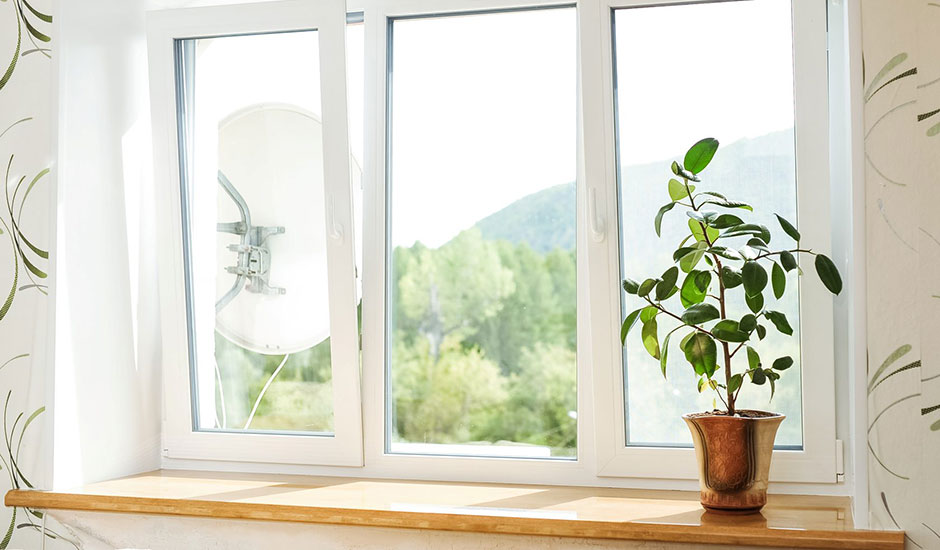
- Narrow window sills mean you need to consider mounting type carefully.
- Rooms often face direct sunlight; priority is light control and privacy.
- There can be balcony doors or slight recesses — this affects mounting choices.
Tip: Measure the glass pane separately from the window frame and reveal to decide between inside-mount and overlay-mount.
Choosing a blind type for the living room
Choice depends on interior style, light control needed and budget. Below are common options with pros and cons for series 104 apartments.
Roller blinds
- Pros: minimalist look, wide range of fabrics from light-filtering to blackout, space-saving.
- Cons: inside-mount needs sufficient reveal depth; on thin sills overlay mounting is often necessary.
- Recommendation: choose fabrics by light transmission — light-filtering or semi-blackout work well for living rooms.
Horizontal (Venetian) blinds
- Pros: precise light control, modern look, durable.
- Cons: can produce noise during operation; slatted look may not suit soft, cozy interiors.
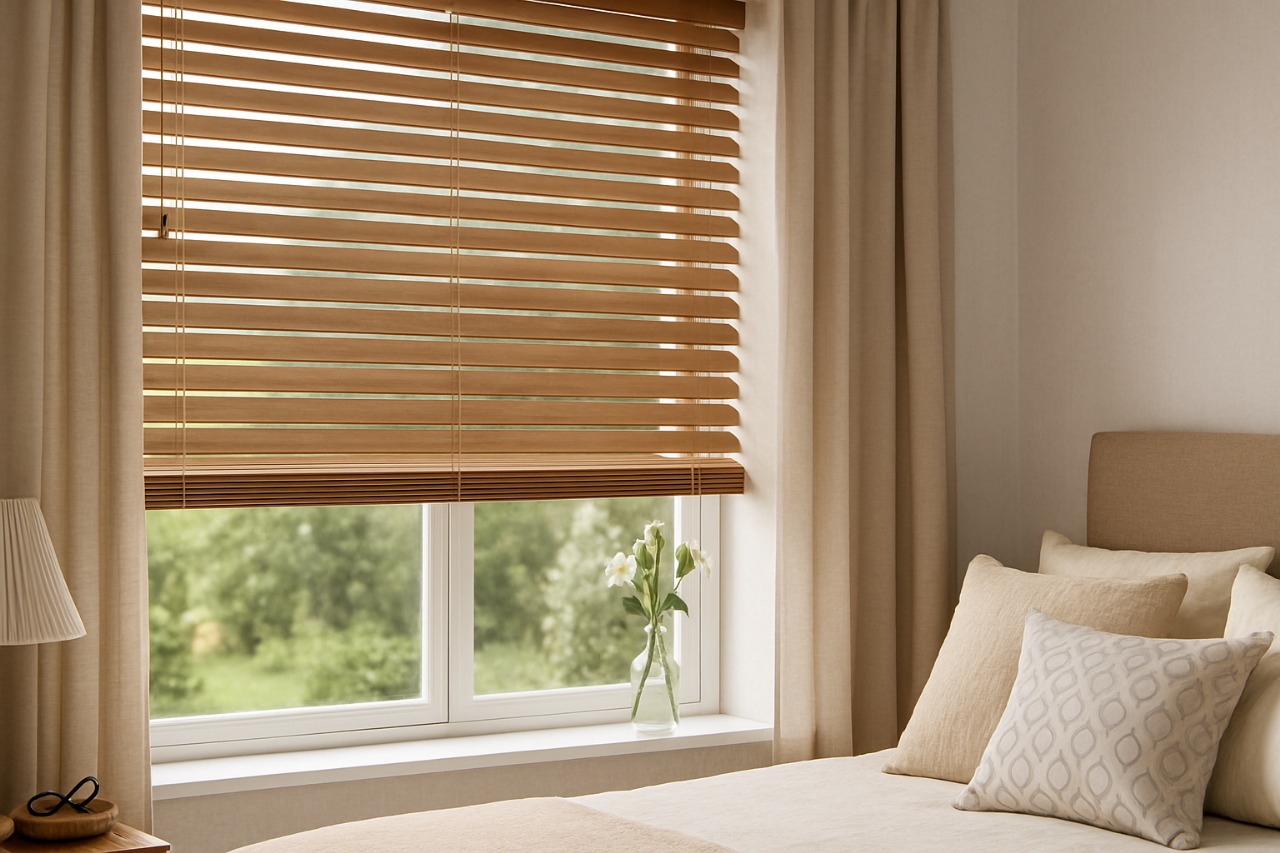
- Recommendation: 25–50 mm slats in white or wood effect suit most living rooms in series 104.
Roman blinds
- Pros: fabric folds create a curtain-like effect, decorative and warm.
- Cons: harder to clean, fabric stack takes space when raised.
- Recommendation: pick models with a blackout lining for better insulation and UV protection.
Wooden and bamboo blinds
- Pros: natural texture and warm aesthetic.
- Cons: sensitive to humidity and temperature changes; require deeper reveals for inside mounting.
- Recommendation: choose lightweight or faux-wood slats for apartments with variable humidity.
Vertical fabric blinds
- Pros: good for wide openings and patio or balcony doors; easy to manage light and privacy.
- Cons: less suitable for narrow windows; may sway if door is frequently opened.
Color, texture and interior matching
- Neutral palettes (white, beige, grey) visually expand a space.
- Warm wood tones add coziness; pastels support a soft interior.
- For a modern minimalist living room choose solid fabrics or aluminum slats.
- Combination: roller or Roman blinds plus a sheer curtain improves privacy while keeping a soft look.
Mounting: inside the frame or overlay
- Inside mounting is preferable when the reveal depth is enough (usually from 40–50 mm).
- Overlay mounting on the frame or wall is suitable for thin reveals and ensures better light blocking.
- For balcony doors, choose models that can fully raise or slide to the side.
- Avoid drilling into delicate frames without consulting the manufacturer; use mounting plates and follow instructions.
Maintenance and service
- Regular cleaning: vacuum with a soft brush or wipe with a dry microfiber cloth.
- For fabric blinds avoid aggressive chemicals; consider professional cleaning for heavy stains.
- Check lifting mechanisms and cords periodically — especially if children are present.
- Motorized systems should be serviced every 2–3 years.
Energy efficiency
Proper blinds can reduce heat loss in winter and limit solar gain in summer. Reflective and backed fabrics help maintain comfortable temperatures and reduce heating and cooling costs.
Frequently Asked Questions
Should I consider radiators when picking blinds?
Often radiators are under the sill. Avoid placing heavy fabric directly against a heat source. Choose mounting solutions that leave space for air circulation.
How to measure windows in a series 104 apartment?
Measure width and height of the glass pane in three places (top, middle, bottom) and use the smallest measurement for inside mounts. For overlay mounts include extra overlap of 30–50 mm per side.
Which blinds are best for panoramic windows?
Vertical blinds or roller models that fully raise are most convenient for large openings and balcony doors.
Can I combine blinds with curtains?
Yes. Combining roller or Roman blinds with a sheer curtain allows flexible light control and enhances the decor.
Do I need sun protection in the living room?
Yes, especially for south-facing windows. Prefer fabrics with UV protection or light-filtering properties.
How to make blinds safe for children?
Install cord safety devices, choose cordless systems or motorized operation.
Conclusion
Selecting blinds for a series 104 living room means balancing window specifics, interior style and functional needs. Roller and Roman blinds are versatile, horizontal slats provide precise light control, and natural materials add warmth. Always take accurate measurements and discuss mounting and maintenance with your supplier.
Summary
- Check reveal depth for inside mounting
- Roller blinds are versatile for living rooms
- Horizontal slats offer accurate light control
- Roman blinds provide textile warmth and pair well with curtains
- Vertical blinds suit wide openings and balcony doors
- Choose UV-protective fabrics for sunny windows
- Cordless and motorized options improve child safety
- Regular maintenance ensures long-term performance
DK-Logi blog topics and categories
Useful articles about PVC windows, blinds, and practical advice for your home.


GET A FREE WINDOW COST ESTIMATE!
Leave a request, and we will contact you to arrange a free measurement and provide a full cost estimate.
Your name
Your phone number *
Your e-mail
File
Choose file
Comment (e.g., window sizes, quantity, preferred profiles)
2025 © All rights reserved