WINDOWS


Date added: 30.10.26
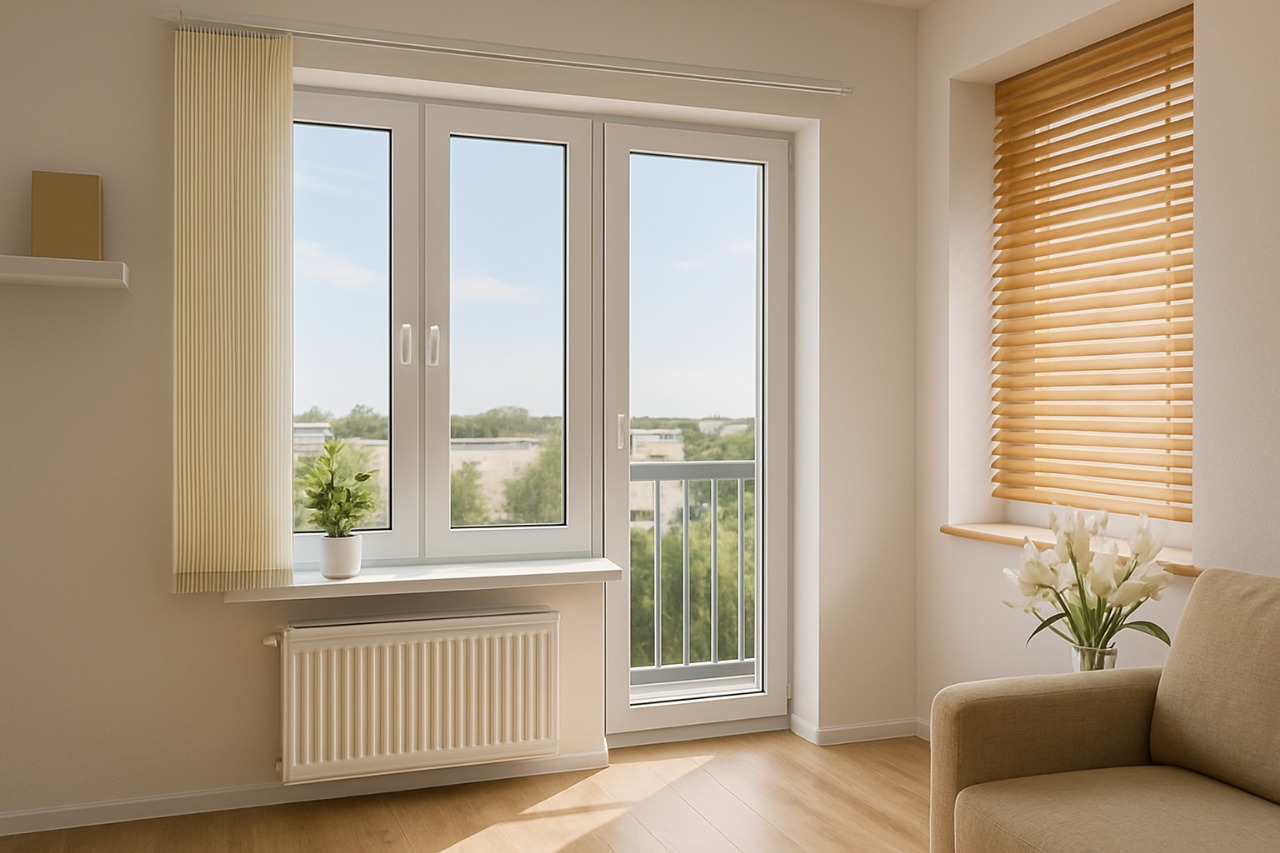
Blinds for offices in the old Lithuanian project
Introduction
Working in an office located in a typical old Lithuanian project apartment has specific challenges: narrow reveals, lower ceilings, and sometimes non-standard window sizes. The right blinds reduce screen glare, increase privacy, and preserve a sense of space. This guide gives practical advice on selecting, measuring, installing, and maintaining blinds for such offices.
Why choose blinds for an office?
- Light control: fine tuning of brightness and direction — essential for computer work.
- Privacy: closed blinds create a focused environment without the feeling of being on display.
- Compactness: many systems can be mounted inside the window frame, saving space.
- Versatility: roller, vertical, horizontal (aluminum), and fabric options are widely available.
Features of old Lithuanian (panel) openings
- Shallow windowsills and narrow reveals limit mounting options.
- Non-standard and sometimes asymmetric sizes are common.
- Windows may have double or triple glazing, affecting mounting methods.
Suitable types of blinds for an office
Roller blinds
- Pros: easy to install, compact, hidden under a cassette, available in light-filtering and blackout fabrics.
- Cons: fabrics can fade under strong sunlight; secure fixation is necessary.
Vertical blinds
- Pros: good for wide windows or balcony doors, allow directional control of light and airflow.
- Cons: can rattle in drafts; may look less cozy in a small office.
Horizontal aluminum or PVC slats
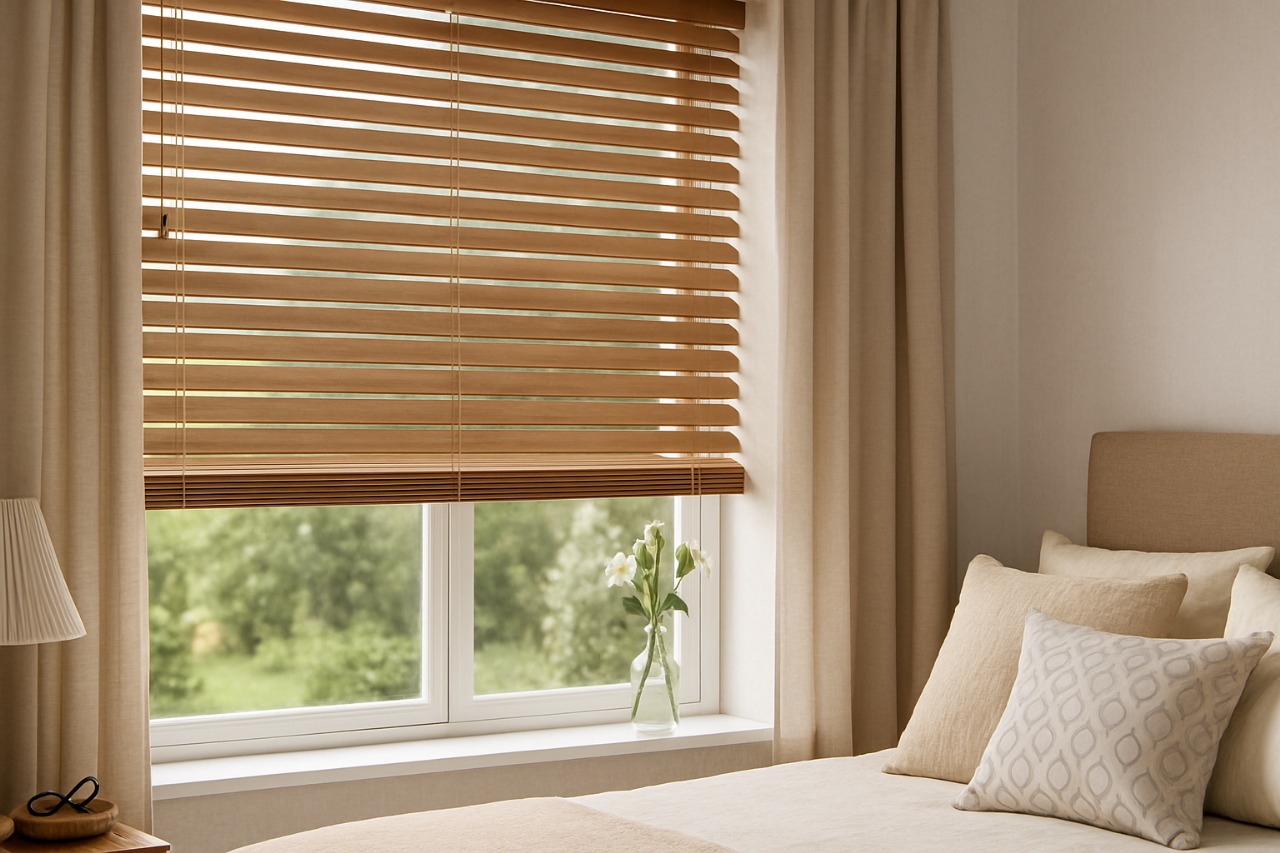
- Pros: precise light control, durable, easy to clean — ideal for heavy office use.
- Cons: more of an office aesthetic, less soft than fabric options.
Roman and fabric blinds
- Pros: add texture and warmth, improve acoustics, available in many opacities.
- Cons: require more careful cleaning and may collect dust.
Practical selection tips
- For glare control: roller or horizontal aluminum blinds are recommended.
- Color: neutral shades (white, light gray, beige) keep the space bright and focused.
- Fabric: choose light-filtering for soft diffusion or blackout for full darkening during video calls.
- Controls: chain, cassette, or motorized systems — motorization is convenient for high or hard-to-reach windows.
- Fire safety: select fabrics with flame-retardant treatment for office use.
Measuring and installation considerations
- Measure width and height at three points (top, middle, bottom) to account for any skew.
- Decide on inside-mounted (within the reveal) or outside-mounted (on the wall/above the window). For older panel flats, outside mounting is often safer.
- Mounting on the sash/frame requires light-weight systems and proper brackets to avoid stressing the hinges.
- If you want to avoid drilling, adhesive or tension-fit options exist, but check load limits and longevity.
Maintenance and care
- Dust regularly with a soft brush or vacuum (fabric blinds with soft nozzle).
- Wipe metal slats with glass cleaner; clean fabrics with gentle detergents when needed.
- Inspect brackets and guides annually; replace worn fasteners to prevent failures.
Cost and lead time
- Standard roller blinds are the most budget-friendly option.
- Aluminum and motorized systems cost more but offer durability and convenience.
- Typical custom lead time is 7–14 days; installation takes 1–3 hours depending on the number of windows.
FAQ — Common questions and answers
1. Can I install blinds without drilling in an old apartment?
Yes, there are adhesive and tension-based systems, but they are not suitable for all window types and have limited load capacity. A professional survey is recommended.
2. Which blinds reduce monitor glare best?
Roller blinds with light-filtering or blackout fabrics and horizontal slats with adjustable angles work best for glare control.
3. How to account for asymmetric openings when measuring?
Measure at three points and either order a system that fits the smallest measurement or choose outside mounting with extra clearance.
4. Is motorization safe in older buildings?
Modern motors operate at low voltage and are safe when installed correctly. Plan for power access or battery packs.
5. What is the expected service life of office blinds?
With proper care, blinds can last from 5 to 15 years depending on material and usage intensity.
Conclusion
For offices in old Lithuanian project apartments, compact functional systems like roller or horizontal aluminum blinds are often optimal. Prioritize light control, mounting method suitable for the reveal, and durable materials. When in doubt, order a site visit for precise measurements and professional advice.
DK-Logi blog topics and categories
Useful articles about PVC windows, blinds, and practical advice for your home.

GET A FREE WINDOW COST ESTIMATE!
Leave a request, and we will contact you to arrange a free measurement and provide a full cost estimate.
Your name
Your phone number *
Your e-mail
File
Choose file
Comment (e.g., window sizes, quantity, preferred profiles)
2025 © All rights reserved