WINDOWS


Date added: 07.09.26
Blinds for swimming pools
Blinds for swimming pools: selection, materials and maintenance
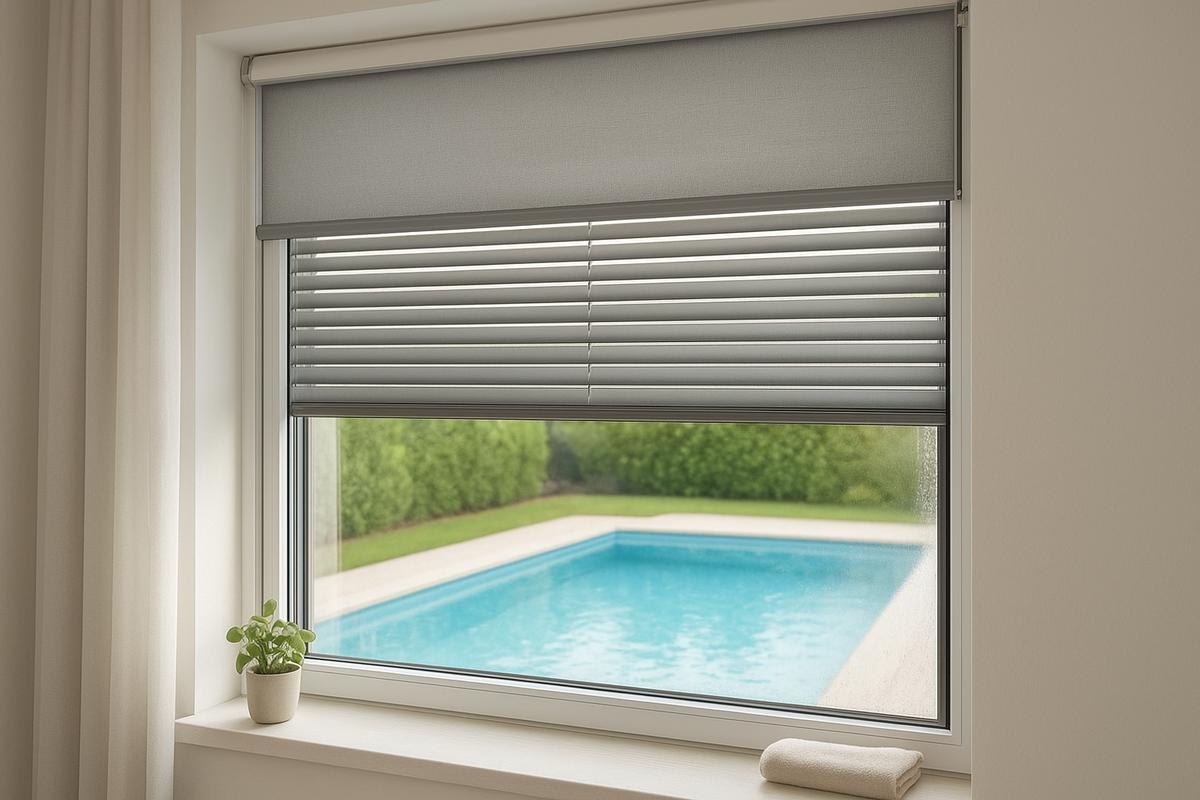
A pool area — whether private or public — creates a demanding microclimate: high humidity, chlorine-laden air, temperature changes and strong sunlight. Blinds for swimming pools must withstand these conditions, remain safe and easy to maintain while providing comfort and privacy.
Suitable blind types
- Roller blinds (with PU or PVC-coated fabrics) — easy to clean, water-resistant options, good for light and splash protection.
- Vertical blinds — suitable for large panoramic windows; choose moisture-resistant slats.
- Aluminium blinds — corrosion-resistant, easy to wash and long-lasting in humid environments.
- PVC/plastic slats — budget-friendly, waterproof, and chlorine-resistant.
- Roman and textile blinds — acceptable only from specially treated, water-repellent or PVC-backed fabrics.
Materials and hardware considerations
- Slats and frames: prefer anodized or powder-coated aluminium profiles, PVC slats, and marine-grade stainless fittings (AISI 316).
- Mechanisms: motors with IP65/IP66 protection for regular exposure to humidity; stainless steel cords or reinforced plastic chains.
- Fabrics: polyester with PVC coating, anti-fungal and anti-bacterial treatments, UV stabilization.
- Seals and guides: plastic or rubber profiles resistant to chlorine and cleaning agents.
Benefits of the right choice
- Protection from sunlight and reduced overheating of water and space.
- Privacy for bathers and controlled daylight.
- Reduced evaporation and heat loss with some dense or thermal fabrics.
- Lower long-term maintenance costs when using proper materials.
Installation and placement tips
- Indoor pool installations must provide ventilation gaps to prevent condensation build-up.
- Full-height guides are useful for panoramic windows to prevent slats from moving in drafts.
- Electric drives should be installed in dry zones or in enclosures with high IP rating.
- For exterior fittings consider wind loads and direct spray.
Care and maintenance
- Regular rinsing with fresh water removes chlorine and salts that cause corrosion.
- Use mild, non-abrasive detergents; avoid bleach and harsh solvents.
- Dry slats and guides after heavy use to prevent stagnation of moisture.
- Inspect mechanics and fixings every 6–12 months: belt tension, motor function, condition of seals.
- Treat mold growth immediately with manufacturer-approved anti-fungal products.
Motors and automation
- Motorized blinds are recommended for large openings: easier operation, smooth movement and reduced wear.
- Choose motors with high ingress protection (IP65+) and manual override features.
- Integration with ventilation or building automation allows scheduled closure during overnight pool conservation.
Frequently asked questions (FAQ)
Can I use standard fabric blinds in a pool hall?
Standard fabrics will absorb moisture and deteriorate quickly. If you want fabric blinds, use specialist water-repellent, PVC-backed and anti-microbial textiles designed for wet environments.
Which slat material withstands chlorine best?
Anodized aluminium or PVC slats perform well. For fixings and mechanisms, marine-grade stainless steel (AISI 316) is recommended to resist corrosive air.
Are motors necessary for large windows?
Yes, motors improve usability and life span of the system for large panels. Ensure the motor has adequate IP protection and sealed electronics.
How often should pool blinds be serviced?
Monthly visual checks and rinsing; a full mechanical service at least once a year.
Can blinds reduce water evaporation?
Dense roller or thermal blinds can help reduce air movement at the water surface and lower evaporation somewhat, but they don’t replace specialized evaporation control systems.
Buying recommendations
- Look for products and components marked "water-resistant" and check motor IP ratings.
- Buy from suppliers experienced with pool environments and who provide installation and warranty for wet conditions.
- Plan for regular maintenance to extend service life and keep costs down.
Conclusion: the right blinds for a pool combine moisture-resistant materials, protected mechanics and professional installation. They enhance comfort, safety and long-term economy.
DK-Logi blog topics and categories
Useful articles about PVC windows, blinds, and practical advice for your home.



GET A FREE WINDOW COST ESTIMATE!
Leave a request, and we will contact you to arrange a free measurement and provide a full cost estimate.
Your name
Your phone number *
Your e-mail
File
Choose file
Comment (e.g., window sizes, quantity, preferred profiles)

2025 © All rights reserved