WINDOWS


Date added: 19.10.26
Common mistakes when installing mosquito nets
Introduction
Mosquito nets are a simple and effective way to keep insects out, but even seemingly minor installation errors can lead to drafts, tears, damaged frames, and shortened service life. This article outlines the most common installation mistakes, how to avoid them, and what to do if a net is already installed incorrectly.
Why correct installation matters
Incorrect installation results in:
- Loss of airtightness and increased drafts;
- Premature wear and tears of the mesh;
- Impaired window sash operation;
- Damage to the frame and degraded appearance;
- More noise and dust entering through the opening.
Proper mounting extends the life of the net and maintains indoor comfort.
Common mistakes during installation
1. Incorrect measurements
A frequent cause of failure is wrong sizing. Measure width and height in multiple places: top, middle, and bottom for width; left, center, and right for height. Measure the actual light opening and do not include decorative trims or seals.
2. Ignoring window type and mounting method
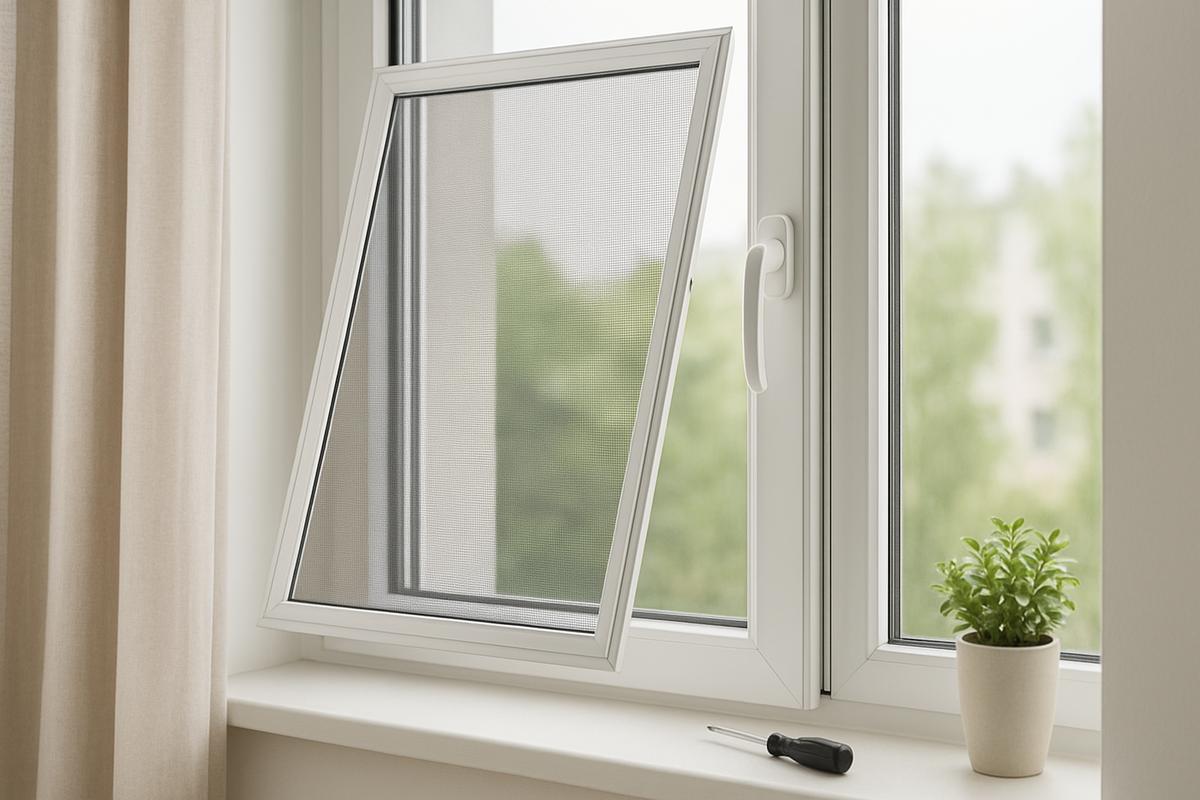
Removable framed nets, magnetic, tensioned, or roller-type each require specific approaches. Installing a framed net on a non-standard sash often results in play and frame damage.
3. Poor fastening and wrong fasteners
Fasteners must match the frame material (PVC, wood, aluminum). Screws that are too long, incorrect anchors, or using glue instead of mechanical fixing will deform the profile.
4. Loose fit and gaps
Even small gaps of 2–3 mm allow insects through. Gaps often occur due to warped frames, poor sealing, or incorrectly adjusted clamps.
5. Over-tensioning and deforming the mesh
Too much tension stretches the mesh and distorts the frame, reducing effectiveness and aesthetics.
6. Improper corner joints
Corners and frame joins must be properly cut, fitted and fixed. Gaps in corners cause the mesh to flap and tear over time.
7. Wrong mesh choice for conditions
Fine mesh is needed where small insects or pollen are an issue; coarse mesh may be acceptable for balconies. Choosing the wrong weave reduces protection or ventilation.
8. Lack of maintenance and regular checks
Even a correctly installed net needs seasonal cleaning, seal checks, and inspection after wind or impacts.
How to avoid mistakes — practical steps
- Measure the opening in three points along each axis;
- Confirm net type and mounting method before ordering;
- Use manufacturer-recommended fasteners for PVC profiles;
- Leave the technical clearances specified by the manufacturer (usually 1–2 mm);
- Avoid over-tightening — even tension is more important than force;
- Check corners and joints before final fixation;
- Choose mesh aperture based on insects and ventilation needs;
- Perform seasonal inspections and cleanings.
Recommended toolkit
- Tape measure and spirit level;
- Screwdriver or drill with adjustable torque;
- Knife for trimming seals;
- Corner clamps for temporary fixing;
- Extra seals and silicone (only if necessary).
What to do if the net is installed wrong
- Assess the defect: gaps, frame deformation, sash operation issues;
- If measurements were wrong or the frame is defective — order a remake or replacement;
- Small gaps can often be fixed with additional seals or clamp adjustments;
- Damaged mesh can be replaced without changing the entire frame if the design allows it.
FAQs
How should I measure my window for a mosquito net?
Measure the visible opening in three places horizontally and vertically, record the smallest values. Account for frame irregularities and use the smallest measured dimensions.
Can I install the net myself?
Yes, for simple framed nets and straight frames. For built-in, roller, or non-standard solutions, professional installation is recommended.
Magnetic vs framed nets — which to choose?
Magnetic nets are convenient for doors and high-traffic openings; framed nets provide tighter sealing for windows and generally last longer.
What to do about drafts around the net?
Check seals and perimeter gaps. Adding sealing tape or adjusting the clamp can often resolve drafts.
How do I maintain a mosquito net?
Clean with a soft brush and warm soapy water. Avoid harsh chemicals. Remove and store nets in a dry place during winter season.
When should I call a professional?
Call a specialist for irregular openings, thin or fragile profiles, or when the net must integrate with decorative elements.
Conclusion
Correct installation is key to the longevity and performance of mosquito nets. Careful measuring, proper fasteners, and routine maintenance prevent most common issues. When in doubt, professional help saves time and avoids costly rework.
DK-Logi blog topics and categories
Useful articles about PVC windows, blinds, and practical advice for your home.




GET A FREE WINDOW COST ESTIMATE!
Leave a request, and we will contact you to arrange a free measurement and provide a full cost estimate.
Your name
Your phone number *
Your e-mail
File
Choose file
Comment (e.g., window sizes, quantity, preferred profiles)

2025 © All rights reserved