WINDOWS


Date added: 08.10.26
Common mistakes when self-installing windows in series 104
Introduction
Installing windows in Series 104 panel apartments is a common DIY project. However, several typical mistakes lead to drafts, mold, and premature failure. This guide lists the most frequent errors, why they happen, and how to avoid them.
What makes Series 104 specific
Series 104 buildings are typical panel constructions with thin external panels and narrow reveals. Walls often contain metal joints and limited insulation, so anchoring, vapor and water barrier work, and correct insulation of the installation gap are critical.
Main mistakes and how to fix them
1. Wrong measurements and wrong window selection
- Mistake: measuring only at one point, ignoring installation gaps and wall alignment.
- Consequence: window won’t fit, profile cutting and warranty issues.
- Fix: measure opening in three places vertically and horizontally, allow 15–20 mm per side for the installation gap.
2. Incorrect anchoring
- Mistake: using short anchors, fixing into hollow parts of panels, or fastening only through plastic frame.
- Consequence: window frame deforms under load, sash misalignment, hardware failure.
- Fix: anchor into load-bearing parts or reinforced belt, use recommended frame anchors and maintain proper spacing.
3. Poor filling of the installation gap
- Mistake: over-foaming or under-foaming, no backer rod or improper sealant sequence.
- Consequence: thermal bridge, cracking of plaster, foam extrusion.
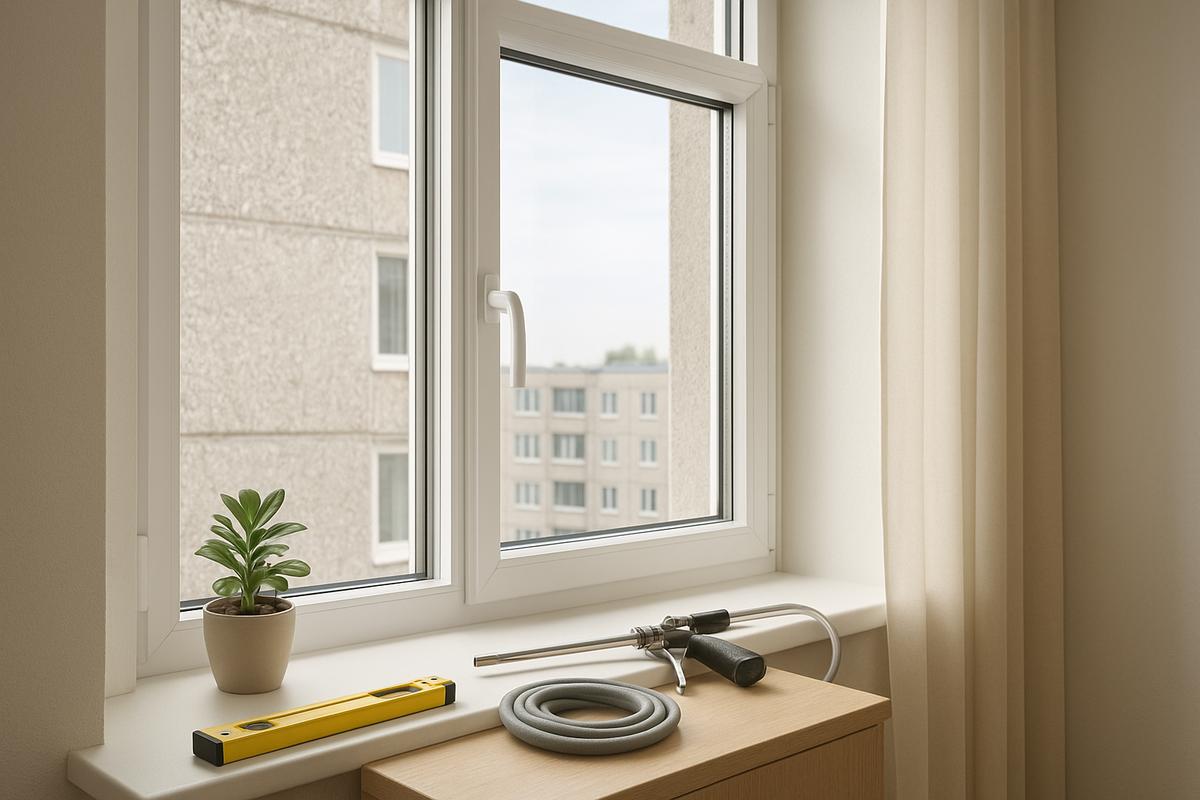
- Fix: use foam sparingly with a gun, add a backer rod, apply internal vapor barrier and external breathable waterproofing.
4. Incorrect vapor and water barriers
- Mistake: sealing only from outside or inside; wrong tapes and sealants used.
- Consequence: condensation inside the joint, mold on reveals, loss of thermal performance.
- Fix: use a differentiated system: interior airtight layer and exterior breathable waterproof membrane with proper drainage.
5. Missing slope and drip cap
- Mistake: no external drip cap or installed without slope; horizontal internal sill.
- Consequence: water intrusion, freezing of sill, plaster detachment.
- Fix: install drip cap with outward slope of at least 5–10 mm per meter and internal slope toward the room.
6. Ignoring temperature regimes
- Mistake: using foam and sealants below recommended temperatures or not allowing proper curing in winter.
- Consequence: incomplete foam expansion, poor adhesion, shrinkage.
- Fix: follow manufacturer temperature guidelines; use winter-grade materials and preheat joint if necessary.
7. Incorrect hardware adjustment
- Mistake: leaving sashes unadjusted after installation and neglecting gap checks.
- Consequence: sagging sashes, leaks on closing, accelerated hardware wear.
- Fix: adjust hinges and compression settings after installation and re-check after a few days.
8. Insufficient finishing of reveals and sill
- Mistake: installing sill without sealing to frame, covering ventilation gap by finishing.
- Consequence: moisture accumulation, mold, poor indoor climate.
- Fix: maintain ventilation gap, seal with interior vapor barrier and use moisture-resistant finishing materials.
Post-installation quality checks
- Check geometry with a level and diagonal measurements.
- Verify gaps and no pinching at hinge points.
- Confirm presence and slope of drip cap.
- Inspect both external and internal seals for continuity and quality.
Frequently Asked Questions (FAQ)
Do I need a permit to replace windows in a Series 104 apartment?
Usually replacement within the existing opening does not require permits. However, changes to the facade or opening size require approval from the building management or local authorities.
What gap should I leave for the installation joint?
Recommended gap: 15–20 mm around the frame to the load-bearing wall. Follow manufacturer guidance for non-standard openings.
Can I install in freezing temperatures?
Yes, but only with materials rated for low temperatures and by following special procedures like preheating the joint and using winter-grade foam.
How long does polyurethane foam cure?
Surface curing: 1–3 hours. Full curing and final shrinkage: up to 7–14 days depending on humidity and temperature.
What to do if there is a draft after installation?
First check sash adjustment, then the seal of the joints and the presence of proper vapor barrier. If anchoring is suspected, contact professionals.
Conclusion
DIY window installation in Series 104 is possible but demands precision, correct materials, and adherence to technology. Mistakes from measurement to finishing degrade comfort and shorten the service life of the window. When in doubt, consult a professional or the window manufacturer.
DK-Logi blog topics and categories
Useful articles about PVC windows, blinds, and practical advice for your home.

GET A FREE WINDOW COST ESTIMATE!
Leave a request, and we will contact you to arrange a free measurement and provide a full cost estimate.
Your name
Your phone number *
Your e-mail
File
Choose file
Comment (e.g., window sizes, quantity, preferred profiles)
2025 © All rights reserved