WINDOWS


Date added: 26.06.26
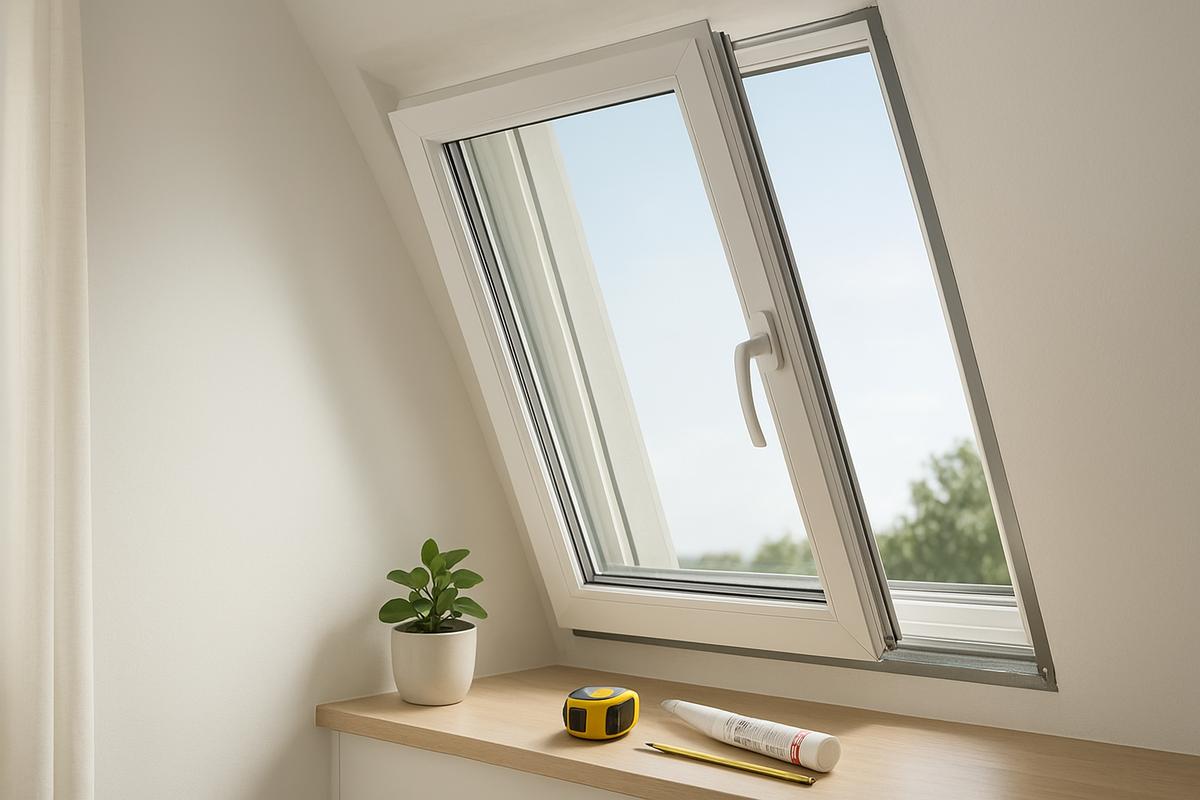
Features of installing windows in attics
Introduction
Installing windows in attics (roof or dormer windows) requires special attention: roof pitch, insulation, waterproofing and structural specifics make the job more complex than installing a typical vertical window. This guide covers choosing PVC windows, preparing the opening, waterproofing, insulation and practical mounting tips to ensure tightness, thermal comfort and proper daylighting.
Types of attic windows
- Roof (pitched) windows — installed into the slope, maximize daylight and sometimes provide access to the roof.
- Dormer windows — vertical openings within a dormer structure, offering upright views and more headroom.
- Combined systems — mixing roof and dormer windows for balanced light and ventilation.
Planning and measurements
- Check the roof pitch — it determines the flashing system and compatible window types.
- Take precise measurements inside and outside, accounting for finishing layers and insulation thickness.
- Decide on sash type and opening direction (top-hung, pivot, or combined) for usability and weather protection.
Structural considerations
- Cutting into the slope often needs assessment of rafters and may require reinforcement; do not remove load-bearing members without strengthening.
- Support beams or headers are frequently installed to create a secure mounting frame.
- PVC profiles should include steel or aluminum reinforcement to handle loads and ensure long-term stability.
Waterproofing and flashing
Proper flashing is essential to avoid leaks. Key steps:
- Install a compatible external flashing kit that matches the roof covering and slope.
- Apply waterproofing and vapor control membranes on both sides of the opening.
- Ensure correct overlap: the roof membrane should lead under the top of the flashing to divert water.
Mistake to avoid: ignoring the flashing sequence leads to water ingress and rot of roof timbers.
Insulation and vapor barrier
- Inside the attic, install a continuous vapor barrier, then insulation (mineral wool or PIR/PUR) and ventilated interior cladding.
- Insulation thickness depends on climate; in Latvia 150–200 mm or more is advisable with energy-efficient glazing.
- Seal gaps with appropriate tapes and low-expansion foam, but do not rely on foam as a vapor barrier.
Ventilation and condensation control
Attics are prone to condensation due to temperature differences. Recommendations:
- Provide mechanical or passive supply/exhaust ventilation or use trickle vents in windows.
- Use triple-glazed units with warm edge spacers to reduce thermal bridges.
- Leave ventilation gaps behind trim and finishes to allow moisture escape.
Finishing and accessories
- Use moisture-resistant materials for internal reveals and trims; ensure continuity of vapor barrier.
- For light control, choose roller blinds, pleated blinds or attic-specific blinds that mount inside the sash or on the reveal.
Safety and regulations
- Follow manufacturer installation guides and local building codes; some installations require fire or sound insulation measures.
- If the window provides roof access, consider fall protection and maintenance safety in accordance with regulations.
Brief installation steps
- Prepare opening and reinforce rafters if needed.
- Fit lower support battens and apply primary seals.
- Install and align the frame, checking plumb and level.
- Mount flashing and external waterproofing.
- Insulate, fit the vapor barrier and finish internal reveals.
- Install hardware, adjust sashes and test operation.
Conclusion
Correct attic window installation combines careful planning, structural reinforcement, correct flashing and reliable insulation. Choose certified PVC systems with energy-efficient glazing, pay attention to ventilation and follow installation standards. This will ensure comfort, durability and trouble-free operation.
FAQ (frequently asked questions)
-
Q: Can a standard vertical PVC window be used in a pitched roof opening?
A: Not directly. Special frames or a dormer structure is needed; consult an engineer. -
Q: Which glazing is best for attics?
A: Triple-glazed units with low-E coating and warm edge spacers. -
Q: How to prevent leaks around attic windows?
A: Proper flashing kits, correct membrane overlaps and professional sealing. -
Q: Is additional ventilation necessary with new windows?
A: Yes — ventilation avoids condensation and maintains indoor air quality.
DK-Logi blog topics and categories
Useful articles about PVC windows, blinds, and practical advice for your home.


GET A FREE WINDOW COST ESTIMATE!
Leave a request, and we will contact you to arrange a free measurement and provide a full cost estimate.
Your name
Your phone number *
Your e-mail
File
Choose file
Comment (e.g., window sizes, quantity, preferred profiles)

2025 © All rights reserved