WINDOWS


Date added: 16.06.26
How to choose PVC windows for an office
How to choose PVC windows for an office
Choosing the right PVC windows for an office affects energy costs, acoustics, employee comfort and security. This guide explains key parameters — frame profile, insulating glass units, hardware, installation and integration with blinds — so you can make an informed decision for your workspace.
Why PVC windows are a good choice for offices
- Good thermal and sound insulation when properly configured.
- Durable and low-maintenance material.
- Easy integration with office blinds and sun protection.
- Variety of opening options for ventilation and safety.
1. Profile (frame)
Pay attention to the number of chambers and profile class. For offices 3–5-chamber profiles are optimal: they provide good thermal and acoustic performance, withstand heavy use, and are compatible with different glass units. Profiles with steel reinforcement increase rigidity and durability, especially in large openings.
2. Insulating glass unit (IGU)
- Single-chamber IGU (double glazing) — basic solution for moderate conditions.
- Double-chamber IGU (triple glazing) — improved thermal and sound insulation, reduces heating costs.
- Low-emissivity (Low-E) coatings and gas fills (argon, krypton) enhance energy efficiency.
For offices in noisy areas, choose IGUs with different glass thicknesses and acoustic glass to noticeably reduce outdoor noise.
3. Sound insulation
Consider the Rw rating. For offices near busy streets, look for IGUs with Rw from 35–45 dB or higher. A combination of a multi-chamber profile and acoustic glass reduces street noise and improves concentration.
4. Ventilation and micro-ventilation
Ventilation modes (micro-ventilation, tilt-and-turn) are critical. Consider supply air valves or a ventilation system together with airtight windows to provide fresh air without heat loss.
5. Hardware and opening types
Hardware must be reliable and rated for frequent use. Tilt-and-turn sashes suit offices and meeting rooms; large openings may benefit from parallel-sliding or top-hung vents for constant ventilation.
6. Security and protection
For ground-floor offices or rooms with expensive equipment, consider anti-burglary hardware, multi-point locks and tempered or laminated glass. These measures increase security and limit injury risk.
7. Integration of blinds and sun protection
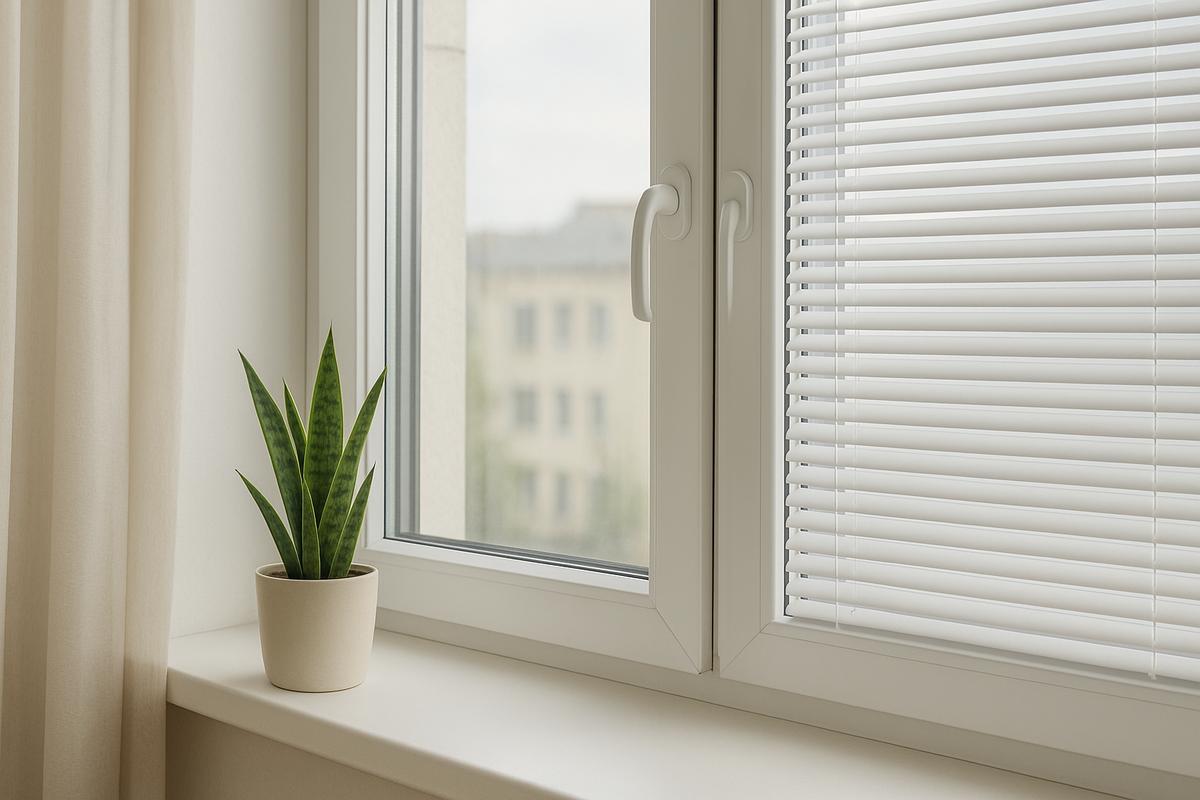
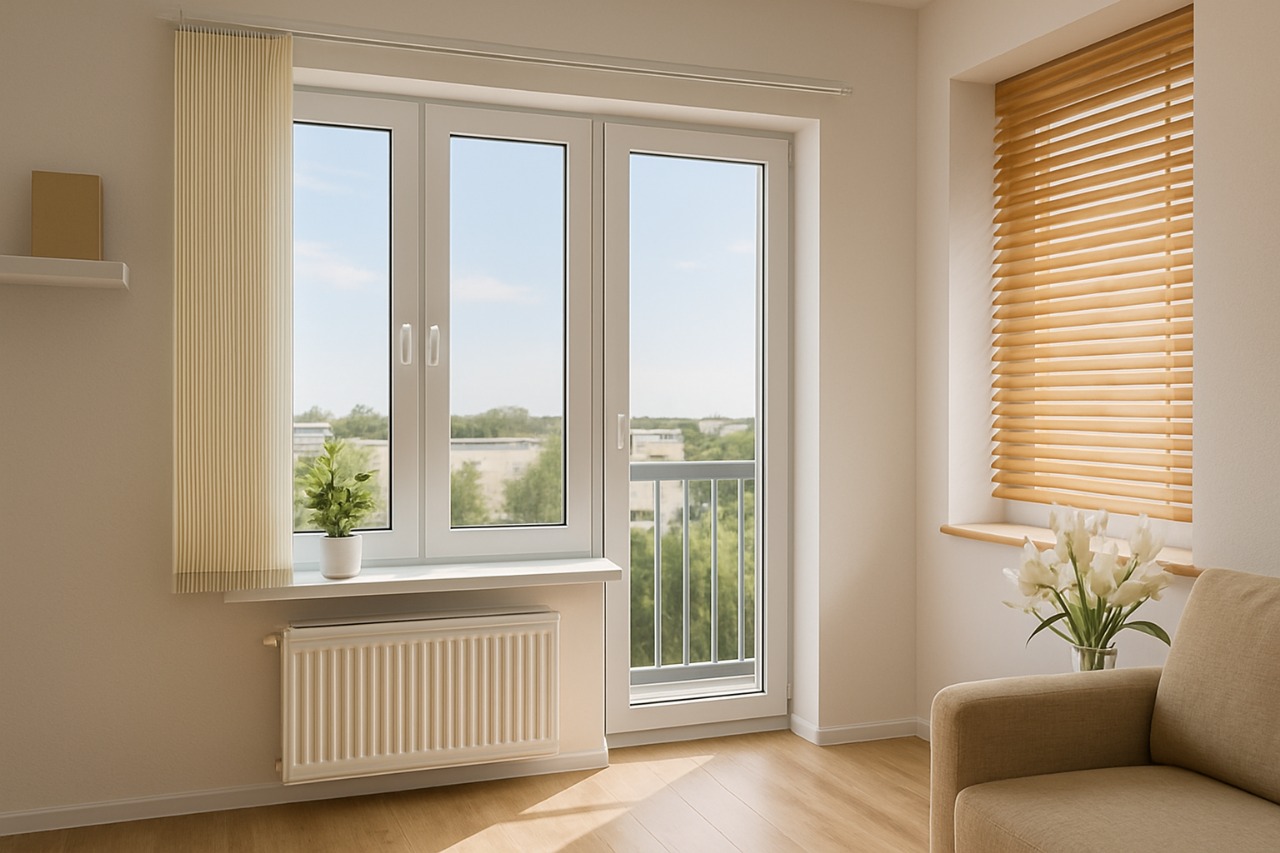
Office blinds (vertical, horizontal, roller) control glare on screens and solar load. Decide between internal, external or in-glass solutions — each has pros and cons in terms of maintenance and aesthetics.
8. Installation and warranty
Professional installation is as important as the product. Poor installation causes thermal bridges, leaks and reduced acoustics. Ask for an acceptance certificate, a warranty and care instructions.
9. Maintenance
PVC frames are cleaned with warm water and mild detergent. Lubricate hardware 1–2 times a year and check seals; replace seals as needed after 5–10 years.
Frequently Asked Questions (FAQ)
Q: Is double or triple glazing better for an office?
A: A double-chamber IGU (triple glazing) offers superior insulation and noise reduction but at a higher cost. For most city offices, a double-chamber IGU is a balanced choice; very noisy or cold locations may justify triple glazing.
Q: How many chambers should the profile have?
A: 3–5 chambers are standard for offices. Five-chamber profiles provide better insulation; three-chamber profiles are more budget-friendly.
Q: Do I need anti-burglary windows for an office?
A: If your office is on a ground floor or contains valuable equipment, anti-burglary fittings and laminated glass are recommended.
Q: Are blinds between glass panes a good idea?
A: In-glass blinds are neat and dust-free but more complex to service. Internal blinds are easier to maintain.
Q: How much does professional installation cost?
A: Costs vary by project complexity and location. Expect a quote including removal, installation, sealing and finishing of reveals.
Conclusion
Choosing PVC windows for an office requires balancing thermal performance, sound insulation, security and cost. Define your priorities, select the right profile, IGU and hardware, and ensure professional measurement and installation. Properly chosen windows will improve comfort and reduce operating costs.
DK-Logi blog topics and categories
Useful articles about PVC windows, blinds, and practical advice for your home.




GET A FREE WINDOW COST ESTIMATE!
Leave a request, and we will contact you to arrange a free measurement and provide a full cost estimate.
Your name
Your phone number *
Your e-mail
File
Choose file
Comment (e.g., window sizes, quantity, preferred profiles)

2025 © All rights reserved