WINDOWS


Date added: 03.10.25
PVC windows for 467 series houses: what to consider
PVC windows for 467 series houses: what to consider
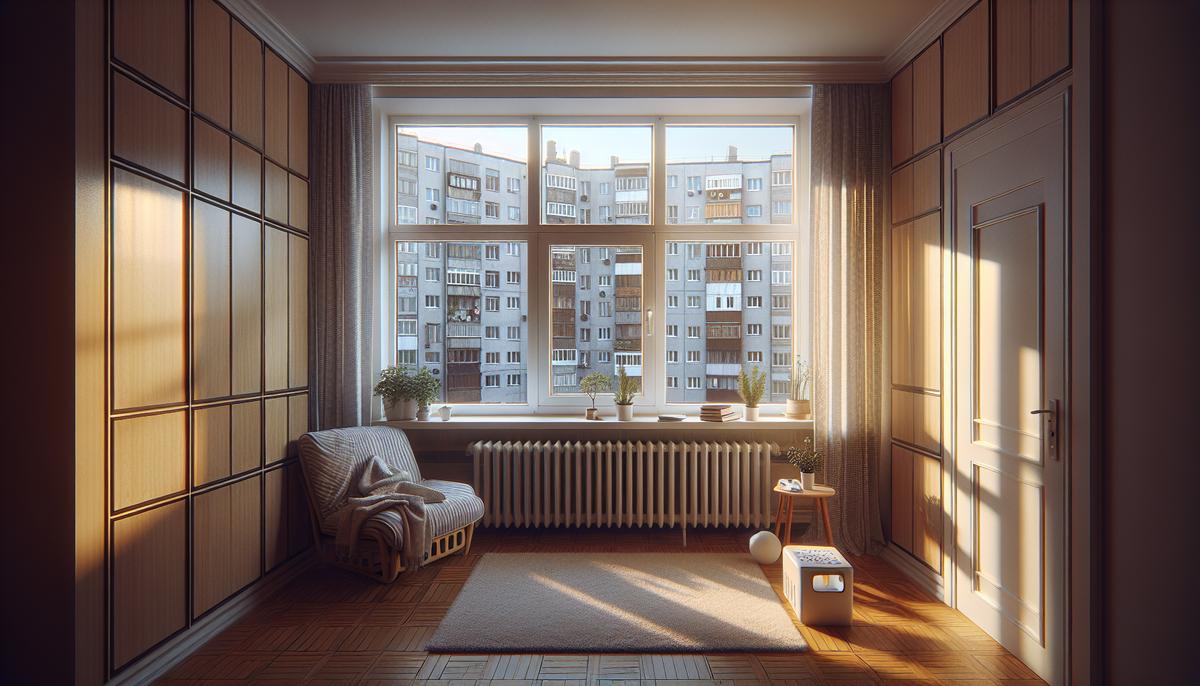
467-series buildings are typical Soviet-era panel apartment blocks found across Latvia and Eastern Europe. Replacing windows in these buildings requires attention to unusual opening sizes, radiator placement, balcony block dimensions, and ventilation needs. Incorrect choices in profile or installation can lead to cold bridges, condensation and poor sound insulation.
Key features of 467 series apartments
- Non-standard or slightly irregular openings due to panel construction.
- Radiators often installed directly under the windows, affecting sill height and airflow.
- Presence of panel joints and limited load-bearing framing in some openings.
- Standard balcony and loggia dimensions that influence balcony block selection.
Choosing the right profile
- Chamber number: 5–6 chamber profiles offer a good balance of thermal and acoustic performance.
- Profile depth: 70–80 mm profiles increase rigidity and allow for thicker insulating glazing units.
- Internal reinforcement (steel or aluminum) is necessary for large or heavy sashes.
Insulating glass units (IGUs): double vs triple glazing
- Double glazing is usually sufficient for most apartments and provides a good price/benefit ratio.
- Triple glazing increases thermal and acoustic performance and is recommended for apartments facing busy roads or in extreme climates.
- Argon filling and warm edge spacers improve U-values and reduce condensation.
Installation essentials
- Check opening squareness and panel joints before installation.
- Use mounting foam with internal vapor barrier and flexible external sealant to prevent moisture ingress.
- Proper mounting joint width (typically 10–20 mm) and controlled fastening are critical.
- Correct drip cap and sill installation prevent water penetration and wall damage.
Radiators and sill considerations
- Ensure convective airflow from the radiator is not blocked by too-low or oversized sills.
- Consider adjustable ventilation grilles or spacing to maintain heat circulation.
Sound insulation and airtightness
- For noise-prone locations, use asymmetrical IGUs (different glass thicknesses) and tight-profile seals.
- Flawless installation is more important than any single component—gaps or poor sealing negate insulation benefits.
Ventilation and micro-vent
- Many PVC windows include a micro-ventilation mode. For panel apartments, consider adding a supply air valve or passive inlet to ensure adequate fresh air and prevent moisture buildup.
Approvals and facade rules
- Replacing windows on a communal facade may require approval from the building management or housing authority, especially if the external appearance changes.
Recommended configuration
- 5–6 chamber profile, 70–80 mm depth.
- Insulating double glazing with low-E coating; triple glazing for noisy or extreme-exposure apartments.
- Warm-edge spacer, argon fill, quality rubbers and micro-ventilation function.
- Professional measurement and certified installation with proper sealing.
Frequently Asked Questions (FAQ)
Do I need permission to replace windows in a 467-series building?
If you keep the same external appearance, many housing managers allow direct replacement. Changing color, shape or balcony blocks usually requires approval.
Can I take measurements myself?
A professional measurer accounts for wall deviations, radiator positions and panel joints. DIY measurements are possible but carry higher risk of error.
What spacer width is suitable for IGUs in these apartments?
Spacers of 12–16 mm are common. Wider spacers combined with warm-edge technology improve insulation.
Is triple glazing necessary?
Triple glazing is beneficial for units exposed to high noise or extreme cold. Otherwise, double glazing with low-E coating and argon is cost-effective.
How to avoid condensation?
Proper installation, balanced ventilation and unobstructed radiator convection under the window are essential.
How long does window replacement take?
Typically 1–3 days per apartment depending on complexity and the number of units being replaced.
Conclusion
Replacing windows in 467-series buildings requires understanding specific structural features and prioritizing correct installation. Choose a balanced profile and IGU, ensure professional measurement and sealing, and coordinate with building management if the facade will change. This approach guarantees better warmth, less noise and longer service life of your windows.
DK-Logi blog topics and categories
Useful articles about PVC windows, blinds, and practical advice for your home.

GET A FREE WINDOW COST ESTIMATE!
Leave a request, and we will contact you to arrange a free measurement and provide a full cost estimate.
Your name
Your phone number *
Your e-mail
File
Choose file
Comment (e.g., window sizes, quantity, preferred profiles)
2025 © All rights reserved