WINDOWS


Date added: 24.07.26
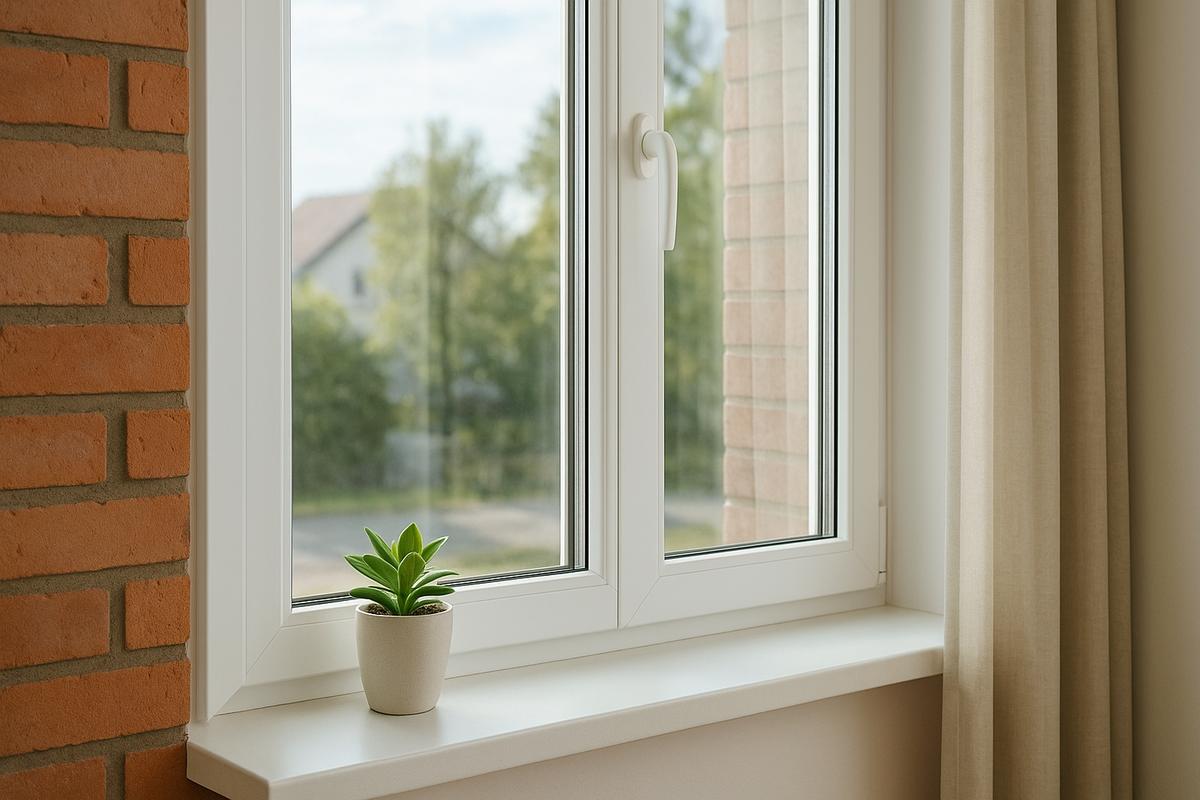
PVC windows for brick houses
PVC windows for brick houses
Summary
- Why window choice matters for brick houses
- Characteristics of brick openings and how they affect installation
- Profile and insulated glazing recommendations
- Sealing, insulation and movement compensation
- Installation stages: anchors, gaps and checks
- Ventilation, condensation management and maintenance
Introduction
Brick houses provide solid walls and good thermal mass, but to achieve comfort and energy efficiency you need correctly selected and installed PVC windows. This guide covers profiles, glazing, installation practices and long-term care specifically for brick buildings.
Brick wall characteristics
- Brick openings are usually stable and allow secure anchoring, but mortar joints and slight unevenness require careful measurement.
- Unlike wooden frames, brick does not shrink, but buildings may settle unevenly — plan mounting gaps accordingly.
- Thicker walls mean deeper window reveals and options for internal insulation layers.
Choosing the right profile
- 3- to 5-chamber PVC profiles are commonly used; more chambers improve thermal insulation.
- Look for reinforced profiles with appropriate steel or aluminum armature for larger spans.
- Energy class ratings and profile thickness are important when comparing offers.
Insulated glazing units (IGUs)
- For Northern climates, double-glazed (two-chamber) units with Low-E coating and argon fill deliver the best balance of thermal performance and cost.
- Consider glass combinations of varying thickness for better sound insulation.
- Warm-edge spacers reduce thermal bridges and improve condensation resistance.
Sealing and insulation strategy
- Use a three-layer principle for the installation joint: inner airtight layer, insulating middle layer (foam or mineral wool), and outer breathable weather-seal layer.
- Low-expansion foam prevents frame distortion. Combine it with vapor barrier tapes on the interior and permeable tapes outside.
- Include compression joints or movement joints where differential movement may occur.
Installation tips
- Prepare the opening: clean, level, and measure diagonals to avoid trapezoid shapes.
- Fastening: anchors or frame anchors fixed into solid brick, typically every 70–100 cm depending on size.
- Leave installation gaps of 10–20 mm around the frame per manufacturer instructions, then fill and seal properly.
- Check opening/closing, drainage channels and slope of the sill for water runoff.
Ventilation and condensate control
- Well-sealed windows require deliberate ventilation: trickle vents, micro-ventilation positions or mechanical systems.
- Ensure sills and external drip edges direct water away from the wall and joint.
- Regularly inspect for condensation; if present, improve ventilation and check seals.
Maintenance and lifespan
- Clean seals and frames with mild detergent; avoid solvents.
- Lubricate hardware annually and tighten fasteners as needed.
- Typical service life exceeds 20 years under normal use; warranties vary by manufacturer.
Cost and timeline
- Price depends on profile class, IGU type, size and complexity of installation. Lead times range from one to three weeks or longer for custom sizes.
FAQs
-
Q: Can PVC windows be fitted without removing internal plaster?
A: Sometimes, but deep refurbishment and insulation typically require opening the reveals for best performance. -
Q: Which IGU is best for soundproofing?
A: Two-chamber IGUs with asymmetric glass thickness perform well for noise reduction. -
Q: How to avoid draughts after installation?
A: Proper sealing with vapor-tight interior tape and breathable exterior tape is crucial. -
Q: Are there special anchors for historic brick?
A: Use chemical anchors or longer mechanical anchors when brick condition is poor. -
Q: Do I need ventilation with modern windows?
A: Yes — airtight windows require planned ventilation to control humidity and indoor air quality. -
Q: How often to service the hardware?
A: At least once a year; more often in coastal or harsh climates.
DK-Logi blog topics and categories
Useful articles about PVC windows, blinds, and practical advice for your home.



GET A FREE WINDOW COST ESTIMATE!
Leave a request, and we will contact you to arrange a free measurement and provide a full cost estimate.
Your name
Your phone number *
Your e-mail
File
Choose file
Comment (e.g., window sizes, quantity, preferred profiles)

2025 © All rights reserved