WINDOWS


Date added: 09.08.26
PVC windows for office spaces
PVC windows for office spaces — modern, efficient, practical
PVC windows are a common choice for commercial interiors due to their durability, thermal performance and low maintenance. This guide explains what to look for when selecting PVC windows for offices, how to integrate sun-control systems like blinds, and what to expect during installation and aftercare.
Benefits of PVC windows in offices
- Energy efficiency: multi-chamber profiles and insulated glazing units reduce heat loss and lower energy bills.
- Sound insulation: proper glazing and seals reduce external noise — vital for meeting rooms and quiet zones.
- Low upkeep: PVC frames do not need painting and resist weathering and corrosion.
- Security: locking hardware, anti-burglary options and reinforced sashes increase protection.
- Versatility in design: white, wood-effect laminates or colored finishes to match office branding.
Key technical aspects to consider
- Profile system: the number of chambers (3, 5, 6) directly affects thermal and acoustic performance.
- Glazing: double or triple glazing, Low-E coatings, and inert gas fills (argon/krypton) between panes.
- Seals: quality EPDM gaskets extend lifespan and maintain airtightness.
- Hardware: stainless or coated fittings, micro-ventilation modes, tilt-and-turn or tilt-only options.
- Performance metrics: look at Uw (thermal transmittance) and Rw (sound reduction) values suited to commercial buildings.
Design and sun-control solutions
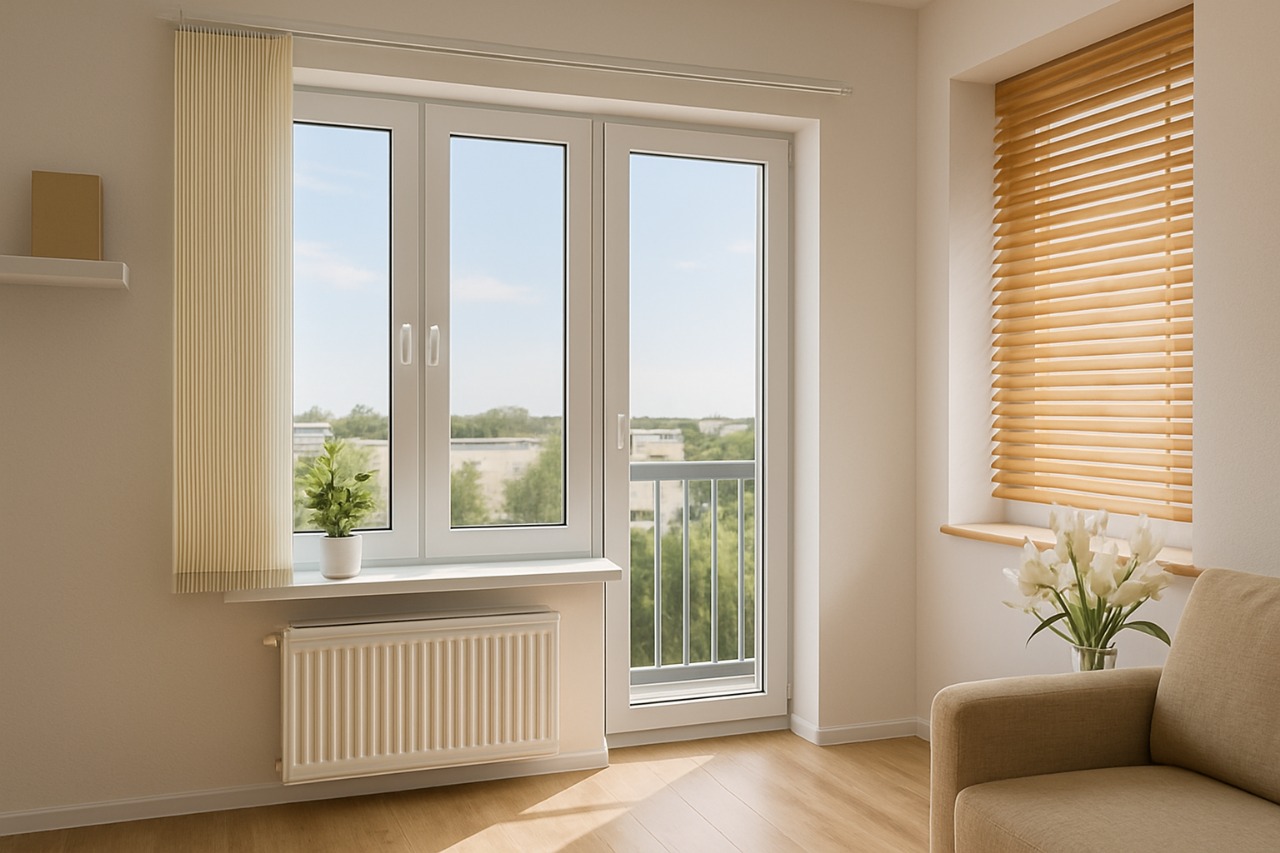
A window in an office is also part of the interior system: sill details, internal blinds and finishes matter.
- Blinds — vertical or roller blinds are common for conference rooms; fabric or Roman blinds suit lounge areas.
- Anti-glare solutions for monitor workstations: reflective control or adjustable slats.
- Sills and cable management: durable sills and integrated cable channels improve functionality.
Tip: Choose blinds and day-light control based on workstation layout and solar orientation to avoid screen glare and overheating.
Installation and maintenance
Correct installation is essential to achieve declared performance.
- Accurate measurement by qualified technicians, including checks for square and level.
- Preparation of the opening: vapor and waterproofing membranes and correct mounting gaps.
- Mechanical anchoring, high-density foam sealing, and external sealing tapes.
- Post-installation adjustment of sashes and hardware after building settlement.
Service and warranty: confirm warranty terms for profile, glazing and hardware. Annual maintenance is recommended — inspect seals and lubricate moving parts.
Choosing the right window — checklist
- Define priorities: thermal efficiency, acoustic insulation or budget constraints.
- Opt for 5+ chamber profiles for better thermal performance.
- Consider triple glazing for cold climates or high noise exposure.
- Select blinds compatible with window operation and fire/safety rules.
- Book professional measurement and U-value calculation.
FAQ
How long does production and installation take?
Typically 2–4 weeks for production and 1–2 days for installation depending on project size.
Is triple glazing necessary for offices?
Not always; triple glazing is recommended in cold climates or where high acoustic performance is required.
How to maintain PVC windows?
Clean frames with mild detergent, clear drainage holes and lubricate hardware once a year.
Can ventilation be integrated into PVC windows?
Yes — modern hardware offers micro-ventilation modes and options for integrated ventilation valves.
Conclusion
PVC windows provide a practical balance of energy efficiency, acoustic comfort and design flexibility for office spaces. Proper selection of profile, glazing and accessories, combined with professional installation, ensures a comfortable workspace and long-term savings.
DK-Logi blog topics and categories
Useful articles about PVC windows, blinds, and practical advice for your home.




GET A FREE WINDOW COST ESTIMATE!
Leave a request, and we will contact you to arrange a free measurement and provide a full cost estimate.
Your name
Your phone number *
Your e-mail
File
Choose file
Comment (e.g., window sizes, quantity, preferred profiles)

2025 © All rights reserved