WINDOWS


Date added: 07.09.26
PVC windows for swimming pools
PVC windows for swimming pools
Summary
- Why PVC is preferred in humid, chlorinated environments
- Choosing the right profile and insulating glass unit (IGU)
- Resistance to chlorine and corrosion concerns
- Ventilation, condensation control and thermal performance
- Correct installation and sealing for pool areas
- Maintenance practices to prolong service life
Introduction
Indoor pools and pool rooms present a unique set of challenges: elevated humidity, chlorine-laden air, and frequent temperature changes. Choosing the right window system affects durability, comfort, and safety. This guide explains why PVC windows are a practical choice for pool areas and what to consider when selecting, installing, and maintaining them.
Why PVC works well near pools
- Moisture resistance: PVC frames do not absorb water or rot like timber.
- Chemical resistance: modern PVC profiles and coatings resist low concentrations of chlorine vapors when properly specified.
- Insulation: multi-chamber profiles and appropriate IGUs improve thermal and acoustic comfort.
- Low maintenance: periodic cleaning with mild agents is usually sufficient.
Key profile and glass features
Profile
- Chamber count: 3–5 chamber profiles are a good balance of stiffness and insulation for pool environments.
- Reinforcement: steel or galvanized reinforcements increase rigidity; in humid conditions, anti-corrosion treatment is recommended.
- Finish and color: light colors reduce heat absorption and are easier to clean.
Insulating glass unit (IGU)
- Glass type: toughened (tempered) glass or laminated safety glass (triplex) increases safety.
- Fill and coatings: argon-filled IGUs and low-emissivity coatings improve energy performance.
- Solar control: for pools with strong sunlight exposure, consider tinted or solar-control glass.
Ventilation and condensation control
Condensation is a major issue in pool spaces. Proper ventilation and design choices reduce moisture-related problems:
- Mechanical ventilation with heat recovery keeps humidity in check and conserves energy.
- Drainage and slope: profiles with effective drainage paths and sloped sills prevent water pooling.
- Trickling ventilation valves in windows allow controlled fresh air intake without large heat losses.
Sealing and professional installation
Installation quality is crucial in pool contexts:
- Use vapor barriers, waterproof tapes, and chlorine-resistant sealants.
- Allow for movement joints to accommodate thermal expansion.
- Leave appropriate mounting gaps and seal them professionally to avoid leaks and thermal bridges.
Note: Cutting corners on installation or sealants often leads to mold, degraded seals, and early replacement.
Accessories and extras
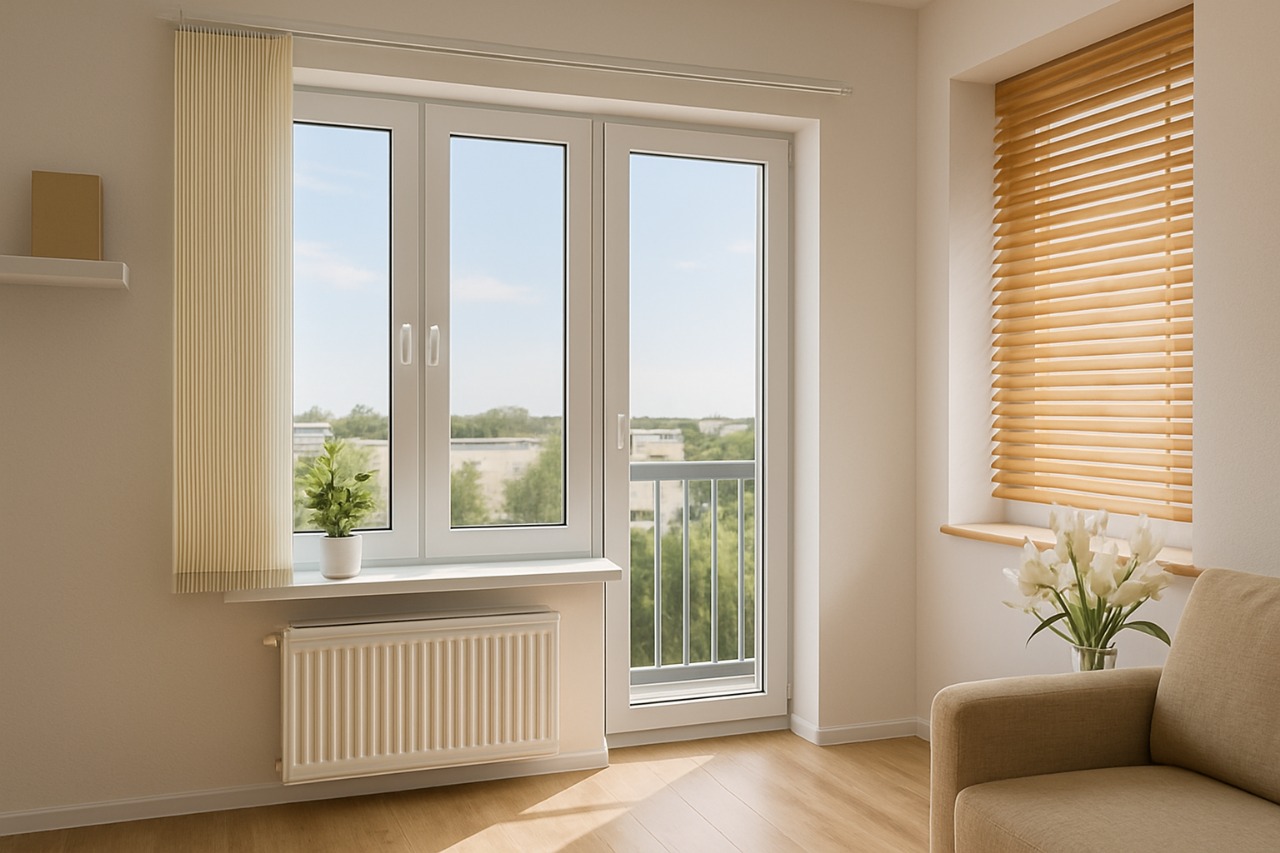
- Blinds and shading: moisture-resistant roller or vertical blinds, PVC slats, or treated fabrics are recommended for pool rooms.
- Corrosion-resistant hardware: stainless steel or coated fittings extend service life.
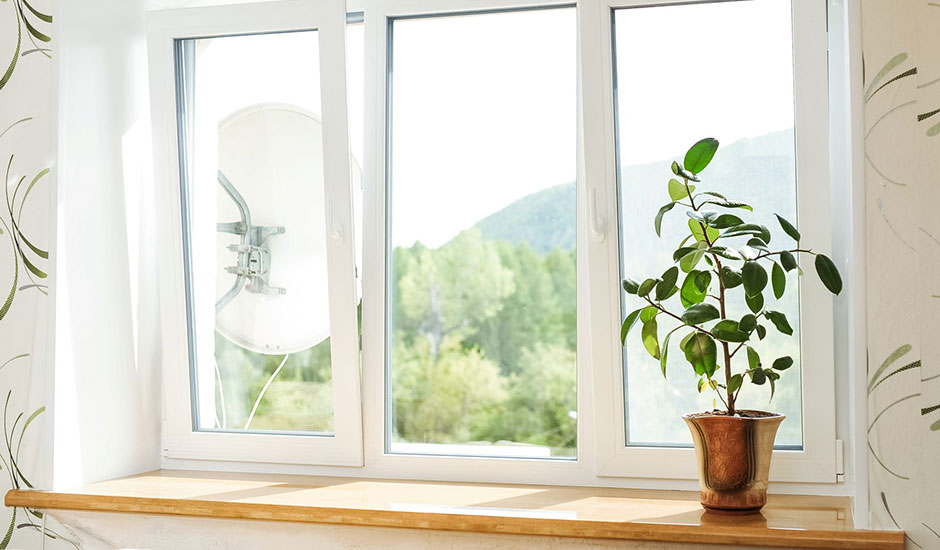
- Water-shedding sills and composite window boards resist humidity and are easy to clean.
Maintenance recommendations
- Routine cleaning with soft water and neutral detergents; avoid abrasive cleaners and aggressive solvents.
- Inspect seals and hardware at least twice a year; replace suspect gaskets with moisture-resistant types.
- Keep drainage channels clear of debris and buildup.
Cost and lifespan
Investing in quality PVC windows with professional installation pays off through energy savings and lower repair costs. With proper selection and maintenance, service life often exceeds 20 years.
Frequently Asked Questions (FAQ)
Which PVC profile is best for pool rooms?
Choose a 3–5 chamber profile with treated reinforcement and a smooth chemical-resistant surface. Specific models depend on climate and insulation needs.
Are regular blinds suitable for pools?
Yes, if they are made of moisture-resistant materials: PVC blinds, coated aluminum slats, or specially treated fabrics are appropriate.
How do I reduce chlorine odors near windows?
Ventilation and water treatment control are primary. Windows resist damage if materials are chosen for chemical resistance, but ventilation reduces airborne chlorine concentration.
How often should pool windows be serviced?
Inspect and clean windows at least twice a year; in high-use or corrosive environments check every 3–4 months.
Can I use standard sealants around pool windows?
No — use sealants and foams rated for humid, chlorinated environments and UV exposure.
What are common installation mistakes?
Common errors include inadequate vapor barriers, poor drainage, the wrong sealant choice, and ignoring recommended mounting gaps.
Conclusion
PVC windows are a practical, durable choice for swimming pool environments when chosen and installed with consideration for humidity, chemical exposure, and ventilation. Proper specification of profiles, IGUs, fittings, and sealants ensures long-term performance and safety.
Contact our specialists for a tailored solution and professional installation recommendations.
DK-Logi blog topics and categories
Useful articles about PVC windows, blinds, and practical advice for your home.



GET A FREE WINDOW COST ESTIMATE!
Leave a request, and we will contact you to arrange a free measurement and provide a full cost estimate.
Your name
Your phone number *
Your e-mail
File
Choose file
Comment (e.g., window sizes, quantity, preferred profiles)

2025 © All rights reserved