WINDOWS


Date added: 12.10.26
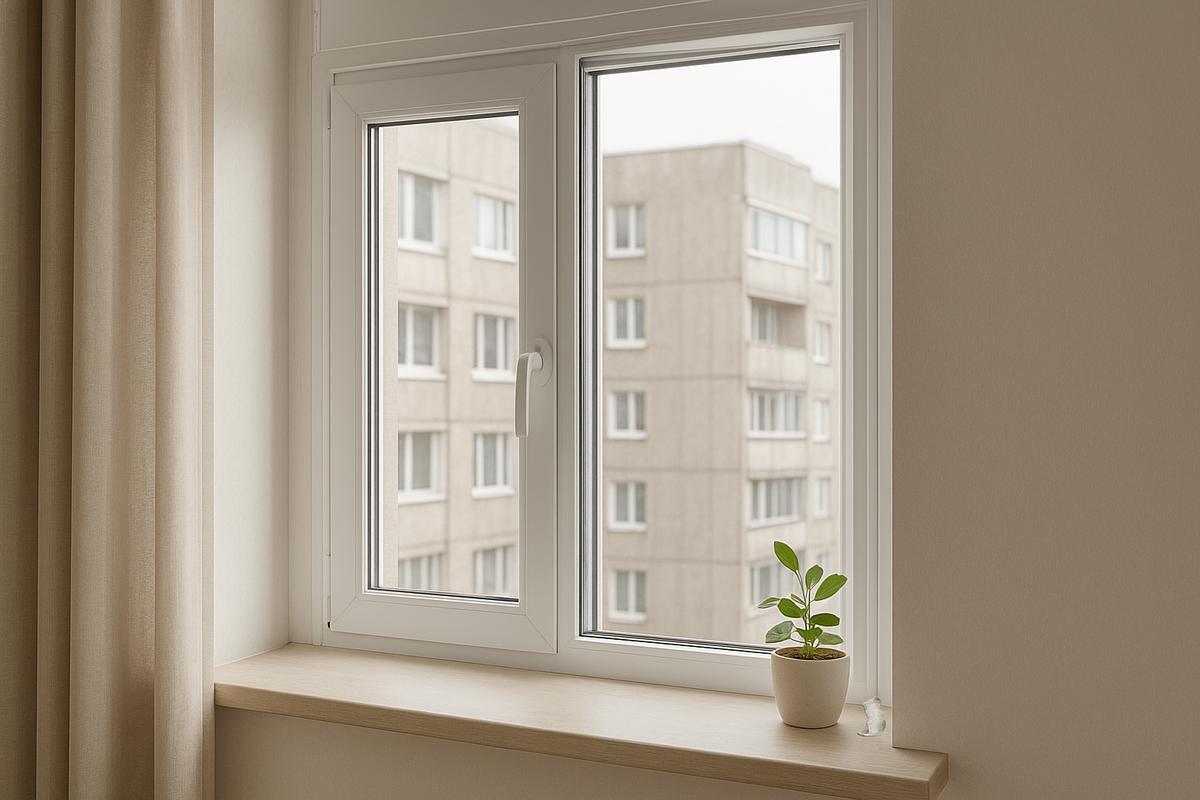
PVC windows for the old Lithuanian project: practical advice
Introduction
Replacing windows in old Lithuanian residential projects (typical Soviet-era panel houses) needs careful planning. Wrong profile choice, inaccurate measurements, or poor installation lead to drafts, moisture, and heat loss. This guide explains how to choose and fit PVC windows to keep the apartment comfortable while respecting the building's character.
Why PVC windows
- Good thermal performance with the right insulated glazing.
- Cost-effective and long-lasting.
- Wide variety of profiles and fittings for non-standard openings.
Step 1 — Inspection and measurements
Before ordering, measure the opening's height, width, depth, wall plumb, and sill condition. Old projects often have irregular openings, uneven reveals, and thin lintels — all affecting the window structure and fixing method.
Tip: book a professional measurer. DIY measurements in older buildings often result in errors.
What to check during measuring
- Horizontal and vertical deviations.
- Wall thickness and space for reinforcement.
- Existing external sills and interior fittings.
Step 2 — Choosing the profile and insulated glass unit
- Profile: for older Lithuanian flats, 3–5 chamber profiles with proper reinforcement are recommended. A 60–70 mm frame depth is a good price-performance compromise.
- Insulated glass unit (IGU): a two-chamber IGU with a low-emissivity coating is effective for colder climates. For sound insulation, choose laminated or asymmetrical glass thicknesses.
- Fittings: corrosion-resistant hardware with micro-ventilation. For larger sashes, choose hardware with reinforced hinges.
Step 3 — Removing old frames and preparing the opening
Proper demolition prevents damage. Old wooden frames may be firmly attached and require careful removal to preserve interior finishes if you plan to keep them.
- Remove old sealants and debris.
- Check opening plumb and level.
- Reinforce the opening with anchors or metal profiles if needed.
Step 4 — Installation and sealing
- Fixing: use anchor plates and brackets; account for possible wall settlement.
- Insulation: fill gaps with appropriate polyurethane foam and protect it with vapor and waterproofing layers.
- Interior reveals: install vapor barrier and finish with drywall or ready-made trims.
- External sealing: use silicone or special exterior sealing tapes and ensure proper water drainage.
Important: unprotected installation foam degrades. Always use sealing tapes and vapor barriers.
Specifics for old Lithuanian projects
- Narrow niches and shallow sills are common — choose suitable sills and trims.
- Changing the facade appearance may require approval from the building manager or municipality.
- Higher indoor humidity in old buildings means ventilation must be considered.
Cost-effectiveness and longevity
- Opt for adequate reinforcement but avoid overpaying for unnecessary premium options if the apartment faces a calm street.
- Minimum 5-year warranty on profiles and hardware is recommended.
- Regular maintenance (lubrication, checking seals) extends the lifetime of windows.
FAQ — common questions
Do I need approval to replace windows in an old building?
In some cases, yes. If the façade appearance changes, consult the building management or local authorities before installation.
How to prevent condensation?
Condensation is often due to inadequate ventilation. Install micro-ventilation in the fittings or a mechanical ventilation system, and use low-e IGUs.
How long does a window replacement take?
Typically 3–5 hours per unit for replacement only. With finishing works (reveals and sill) expect 1–2 days.
Which profile is best for soundproofing?
A 70 mm profile with a two-chamber IGU and laminated or mixed-thickness glass performs well for noise reduction.
What about sills and external drip edges?
Replace the internal sill with moisture-resistant material. Fit external drip edges so water flows away from the wall.
Conclusion
Replacing windows in an old Lithuanian project requires precision: accurate measurement, a suitable profile, quality installation, and attention to ventilation. With the right approach you will achieve a warm, quiet and energy-efficient home without compromising building aesthetics.
DK-Logi blog topics and categories
Useful articles about PVC windows, blinds, and practical advice for your home.

GET A FREE WINDOW COST ESTIMATE!
Leave a request, and we will contact you to arrange a free measurement and provide a full cost estimate.
Your name
Your phone number *
Your e-mail
File
Choose file
Comment (e.g., window sizes, quantity, preferred profiles)
2025 © All rights reserved