WINDOWS


Date added: 14.10.26
Tips for installing windows in the new Lithuanian project
Introduction
Installing PVC windows in a new Lithuanian project requires attention to local building standards, energy performance requirements and coordination with the developer. This guide provides step-by-step recommendations on preparation, measurement, fixing, sealing and handover to ensure airtightness, thermal efficiency and long-term durability.
Key stages
- Document check and project specifications.
- Precise measurements and selection of frame/glazing.
- Opening preparation (check flatness and squareness).
- Fixing, alignment and anchoring of the frame.
- Sealing joints (internal and external layers).
- Installation of sill, drainage and exterior finishing.
- Quality control and final acceptance.
Preparation
Documents and planning
Before installation, request opening drawings, facade specifications and thermal performance requirements from the developer. New Lithuanian projects may require high insulation standards (near-passive or low-energy), so choose glass units and frames with suitable Uw and g-values.
Tools and materials
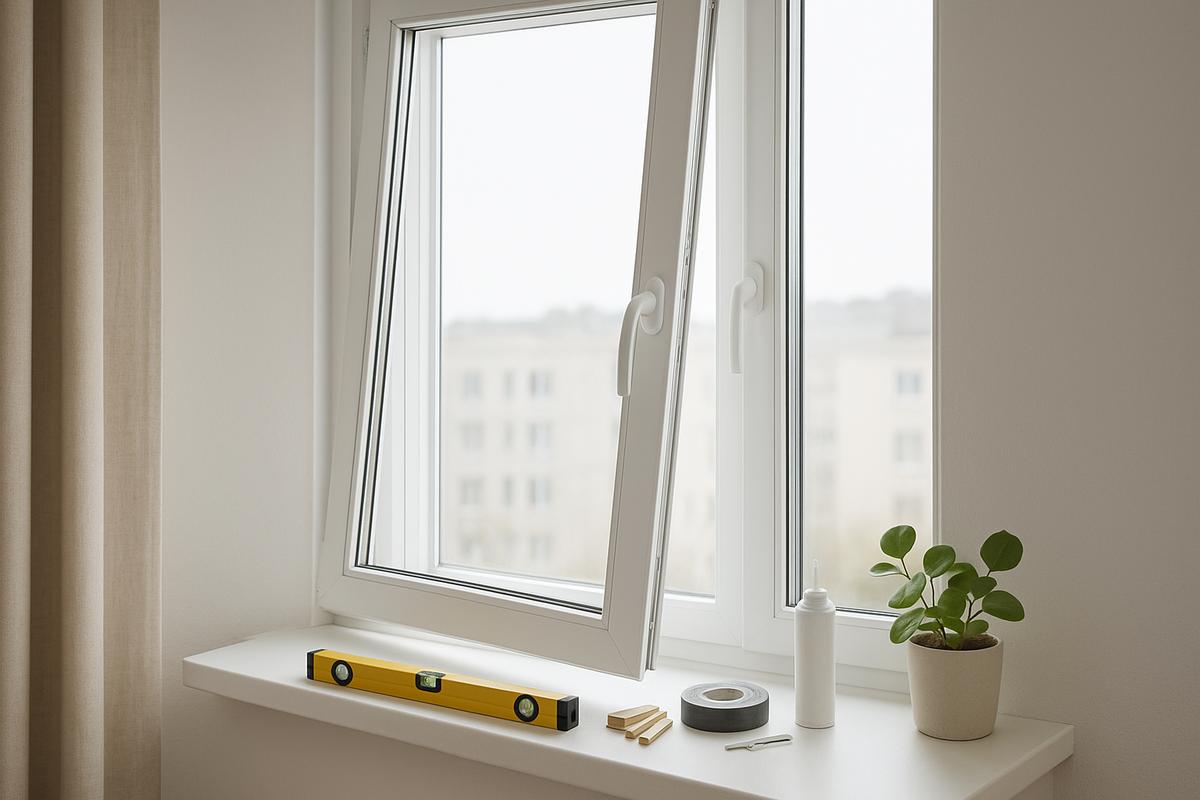
- Spirit level, plumb line, mounting wedges and shims.
- Anchors or mounting plates suitable for the wall material.
- Low-expansion polyurethane foam, internal vapour-barrier tape, external windproof tape.
- Exterior silicone and internal sealants rated for building use.
Measuring and product selection
Accurate measurement is critical. Measure width and height at three points (bottom, middle, top) and the depth of the reveal. Leave the recommended installation gap (commonly 10–20 mm around the perimeter, depending on window size and building conditions).
Choose profile and glazing according to climate and energy goals: double or triple glazed units, warm-edge spacers, argon fill, and low-E coatings can significantly improve thermal performance.
Installation sequence
- Verify geometry of the opening: flatness and absence of protrusions.
- Install support profiles or mounting sill if required.
- Mark fixing points and install anchors or plates.
- Position the frame and temporarily secure with wedges.
- Adjust for level and plumb, then permanently anchor.
- Fill the installation gap with low-expansion foam.
- Apply external windproof tape and internal vapour barrier tape.
- Fit sill, external drip profiles and interior finishes.
Tip: For cold weather installations use foams and sealants rated for low temperatures to maintain performance.
Sealing and insulation principles
Use the two-contour sealing approach: the external layer must be vapour-permeable to allow moisture to escape, and the internal layer should be vapour-tight to prevent warm indoor air reaching the insulation. Proper tapes and their correct installation are often more important than expensive foam.
Ensure sills and drainage are installed with an adequate slope to divert water away from the facade, and provide appropriate outlet points in the lower frame.
Quality control and handover
- Test sash operation: smooth movement, correct closing pressure, and alignment.
- Inspect seals visually and perform air-tightness checks (smoke, veil, or blower-door if available).
- Check external tapes and drip profiles for correct positioning and overlap.
Conduct acceptance with the developer and contractor present; record any deficiencies in the handover protocol with deadlines for correction.
Practical tips for Lithuanian projects
- Pay attention to energy performance obligations in new builds—select frame and glass accordingly.
- Coordinate installation details with facade contractors to avoid damaging insulation layers.
- Schedule deliveries to reduce on-site storage time and protect windows from weather or mechanical damage.
Frequently Asked Questions (FAQ)
What installation gap should I leave?
The common recommendation is 10–20 mm around the perimeter, but check the profile manufacturer’s guidelines. Larger openings may need wider gaps and specific anchoring.
Which sealant is best for external joints?
Use silicone or polyurethane sealants rated for UV exposure and temperature cycling. Windproof tape combined with a drip profile provides primary protection.
Is an internal insulation layer necessary?
Yes. The internal vapour-tight layer protects the insulation from indoor humidity and maintains the thermal continuity of the wall.
Conclusion
A correct window installation combines accurate measurement, proper sealing strategy and coordination with the building works. In new Lithuanian projects, pay special attention to energy efficiency and moisture management. Proper acceptance procedures and documentation will protect the building owner and ensure long-term performance of the windows.
DK-Logi blog topics and categories
Useful articles about PVC windows, blinds, and practical advice for your home.


GET A FREE WINDOW COST ESTIMATE!
Leave a request, and we will contact you to arrange a free measurement and provide a full cost estimate.
Your name
Your phone number *
Your e-mail
File
Choose file
Comment (e.g., window sizes, quantity, preferred profiles)
2025 © All rights reserved