WINDOWS


Date added: 07.10.26
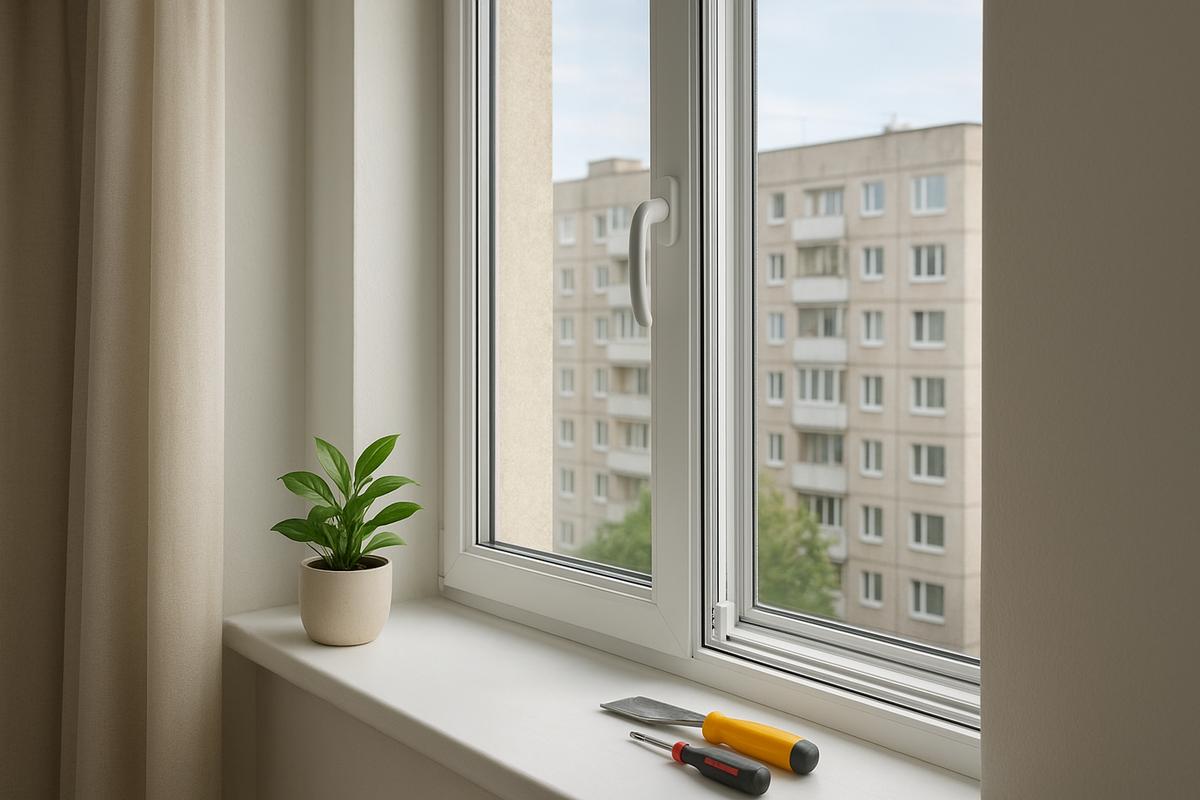
Tips for replacing windows in series 104
Tips for replacing windows in series 104
Replacing windows in typical series 104 apartments requires attention to the building's panel construction, facade rules and common installation pitfalls. This guide covers measurements, profile and glazing selection, mounting, insulation and final inspection.
What makes series 104 special
- Series 104 apartments usually have shallow window recesses and standard-sized openings, often with concrete inner sills.
- Facade appearance and building regulations may limit external changes.
- Limited recess depth affects choices for profile, glazing and installation method.
Preparation and measurements — where to start
- Measure the opening in three spots: width at top and bottom, and heights at left and right. Record the smallest dimensions.
- Check whether you need permissions from the homeowners association or local authorities for façade changes.
- The surveyor should inspect slopes, sills and reveal depth — sometimes the inner sill must be removed for a precise fit.
Tip: Use a certified measurer — DIY measurements have higher risk of errors.
Choosing profile and glazing
- 5–7 chamber PVC profiles are common; 6–7 chambers provide better thermal and sound performance.
- A two-chamber energy-efficient insulated glass unit (IGU) is a balanced choice for cost and performance.
- For noisy streets, consider laminated glass or acoustic IGUs.
- Pay attention to hardware class: anti-burglary elements and durable hinges improve longevity.
Dismantling old windows and preparing the opening
- Ensure careful dismantling to preserve slopes if you plan to restore them.
- In some buildings the sill is cast in place; partial removal or trimming may be necessary.
- Inspect the lintel and opening structure — some openings require reinforcement.
Installation: key steps and technology
- Leave a mounting gap of 10–20 mm around the perimeter for foam and expansion joints (depending on window width).
- Fastening: use anchor bolts or mounting plates; in panel buildings, anchors into the concrete panel are typical.
- Sequence: install the frame — level and plumb — secure it — external sealing — internal insulation.
- External sealing must be breathable (weather membrane), internal sealing should be airtight (vapor barrier tape).
Important: allow assembly foam to cure completely before installing sills and slopes.
Insulation and soundproofing
- Inner contour: seal tapes and assembly foam; outer contour: weatherproofing. Proper sequencing reduces condensation risk.
- Use vapor barrier on the room side and vapor-permeable materials on the exterior side.
- For better soundproofing, fill the mounting gap with acoustic materials.
Ventilation and operation
- Natural ventilation in panel apartments is often insufficient. Consider built-in trickle vents or mechanical ventilation.
- Regularly check hardware: ventilation positions, sash sagging, and micro-ventilation closure.
Interior and exterior reveals
- Interior reveals can be finished with plasterboard plus insulation, PVC panels or plaster — choice depends on budget and aesthetics.
- Exterior reveals must comply with facade regulations; sometimes approval is needed.
Timeframe and approximate costs
- A standard window replacement in series 104 usually takes 3–6 hours if no complications occur.
- Cost depends on profile class, IGU type and demolition complexity. Request quotes from several suppliers for accurate pricing.
Quality control and acceptance
- Check: frame alignment, sash sealing, absence of drafts, smooth exterior joints and correct sealing.
- Ask for product certificates, IGU documentation and installation warranty.
Frequently Asked Questions
How long do new PVC windows last?
A well-made and properly installed PVC window can last 25–40 years. Correct installation and maintenance are decisive factors.
Do I need permits to replace windows in series 104?
Replacing windows inside an apartment usually does not require permission, but changing the façade appearance may require approval from the homeowners association or local authorities.
Can I replace a window without removing the internal sill?
It depends on the construction. Sometimes trimming is enough, but in most cases removing the sill ensures a precise fit.
How to avoid fogging after replacement?
Proper ventilation, correct sealing sequence and allowing foam to cure reduce condensation. Installing a trickle vent may also help.
Pre-order checklist
- [ ] Accurate opening measurements (at least three points).
- [ ] Check façade restrictions and necessary approvals.
- [ ] Select profile and IGU for required thermal and acoustic performance.
- [ ] Clarify fastening and insulation methods.
- [ ] Sign off on works acceptance and installation warranty.
Follow these recommendations and choose experienced installers — correct choices at the planning and installation stages will bring decades of comfort.
DK-Logi blog topics and categories
Useful articles about PVC windows, blinds, and practical advice for your home.

GET A FREE WINDOW COST ESTIMATE!
Leave a request, and we will contact you to arrange a free measurement and provide a full cost estimate.
Your name
Your phone number *
Your e-mail
File
Choose file
Comment (e.g., window sizes, quantity, preferred profiles)
2025 © All rights reserved