WINDOWS


Date added: 08.09.26
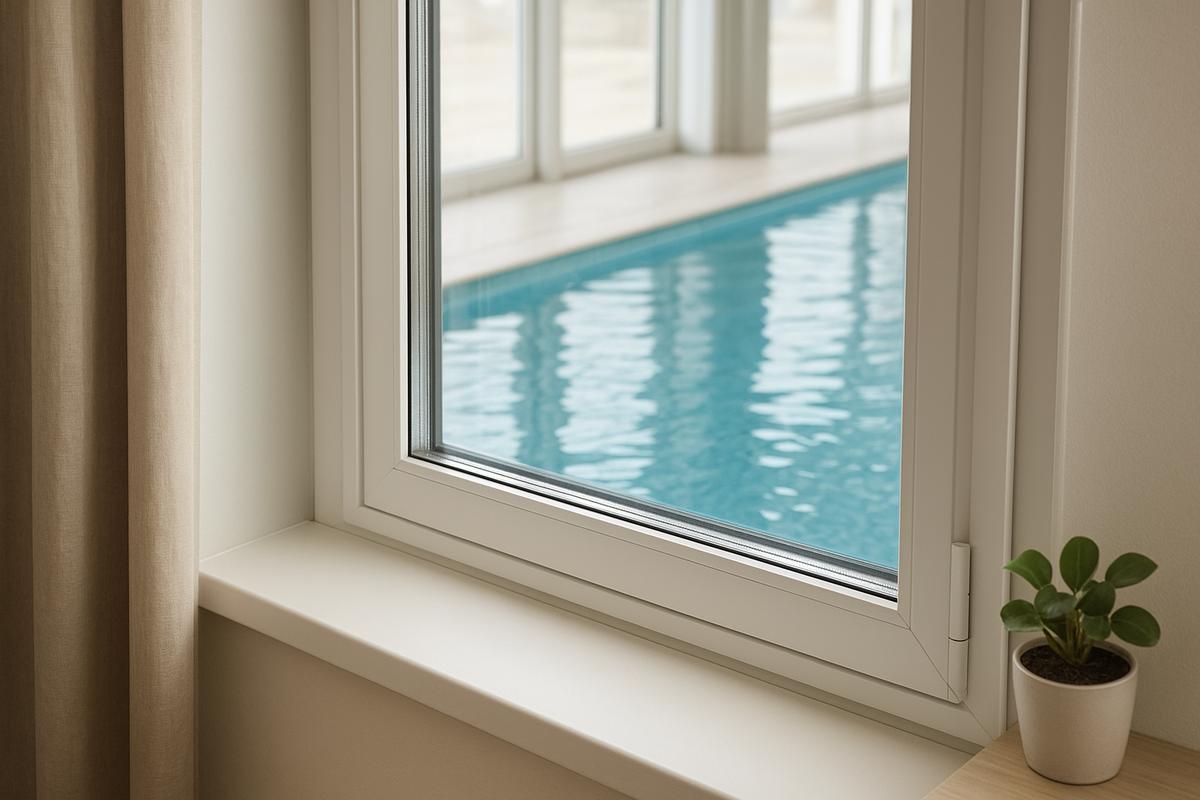
Which glazing units are best for swimming pools
Which glazing units are best for swimming pools
Swimming pools — especially indoor ones — create aggressive conditions for windows: high humidity, chlorinated air and temperature swings. When choosing a glazing unit (IGU), consider not only thermal and acoustic performance but also resistance to corrosion, safety and the durability of edge seals.
Key factors to consider
- Humidity and aggressive vapors: chlorine and chemicals accelerate corrosion of metal parts and degrade sealants.
- Condensation: cold glass surfaces cause fogging; reducing cold spots helps prevent dripping.
- Safety: near water there is a greater risk of impacts and falls — impact-resistant or laminated glass is important.
- Spacer and seal durability: the quality of the edge seal is critical for IGU lifespan.
Recommended types of glazing units
-
Laminated (triplex) + tempered glass
- Laminated glass prevents shards from scattering on breakage — essential for pool areas.
- A combination of tempered outer pane and laminated inner pane provides strength and safety.
-
Multi-chamber IGUs (double/triple)
- For indoor pools, 2- or 3-pane units filled with inert gas (argon or krypton) reduce heat loss and minimize cold surfaces.
- Triple glazing better resists condensation because inner surfaces remain warmer.
-
Warm edge spacers and corrosion-resistant frames
- Choose warm-edge spacers made from composite or non-metallic materials rather than aluminum.
- Spacers and sealants must be chlorine-resistant: high-quality butyl and polysulfide seals extend lifetime.
-
Low-E coatings and anti-fog options
- Low-E coatings reduce heat loss and help keep the inner surface warmer, decreasing condensation risk.
- Anti-fog or hydrophilic coatings on the inner pane reduce visible fogging but require careful maintenance.
-
Gas fill: argon vs krypton
- Argon is effective and cost-efficient for double and triple units.
- Krypton provides higher insulation per thickness and is useful in slim-profile units, but is more expensive.
Installation and construction notes
- Fixing and sealing: use sealants and adhesives rated for chlorine exposure and high humidity. Poor sealing allows moisture into the spacer and degrades the desiccant.
- Desiccant quality and dual-seal systems: for pool environments, choose IGUs with high-capacity desiccants and double-edge sealing (primary and secondary seals).
- Avoid exposed corrodible metals: use stainless or treated metals, or composite spacers.
Practical recommendations
- Indoor pools: opt for triple glazing with laminated inner pane, warm-edge spacer, argon fill and Low-E coating.
- Outdoor pool enclosures: double glazing with tempered glass and UV-stable spacers may be sufficient.
- Public or heavily used pools: laminated + tempered hybrid solutions for maximum safety.
Maintenance and operation
- Maintain good ventilation and use dehumidification systems — this reduces stress on glazing units.
- Inspect seals and spacer areas every 6–12 months.
- Clean salt and mineral deposits with mild detergents; avoid solvents that can damage sealants.
Important: the glazing unit is only part of the system. Proper ventilation, humidity control and choice of corrosion-resistant materials across the structure are essential for long service life.
FAQ — Frequently Asked Questions
Do I need special glass because of chlorine?
Yes. Chlorine in the air increases the risk of corrosion and sealant degradation. Choose spacers and sealants designed for chlorine resistance and consider composite warm-edge spacers.
Is laminated glass necessary?
For indoor and public pools, laminated glass is strongly recommended for safety — it holds fragments in place on breakage.
How to reduce window fogging?
Triple glazing combined with Low-E coatings and balanced ventilation significantly reduces condensation. Anti-fog coatings can help but require correct maintenance.
How long will a glazing unit last near a pool?
With proper materials and installation: typically 15–25 years. Poor sealing and inadequate ventilation can shorten life to 5–8 years.
Can I save money with a standard IGU?
Saving on materials often leads to premature failure in pool environments. Investing in pool-suitable IGUs pays off by avoiding frequent replacements.
Summary
- Pools demand IGUs resistant to humidity and chlorine.
- Laminated and tempered glass combinations improve safety.
- Warm-edge spacers and chlorine-resistant seals extend lifespan.
- Triple glazing reduces condensation in indoor pools.
- Argon is a cost-effective fill; krypton for space-limited profiles.
- Proper ventilation and maintenance are essential for durability.
DK-Logi blog topics and categories
Useful articles about PVC windows, blinds, and practical advice for your home.

GET A FREE WINDOW COST ESTIMATE!
Leave a request, and we will contact you to arrange a free measurement and provide a full cost estimate.
Your name
Your phone number *
Your e-mail
File
Choose file
Comment (e.g., window sizes, quantity, preferred profiles)
2025 © All rights reserved