WINDOWS


Date added: 25.09.26
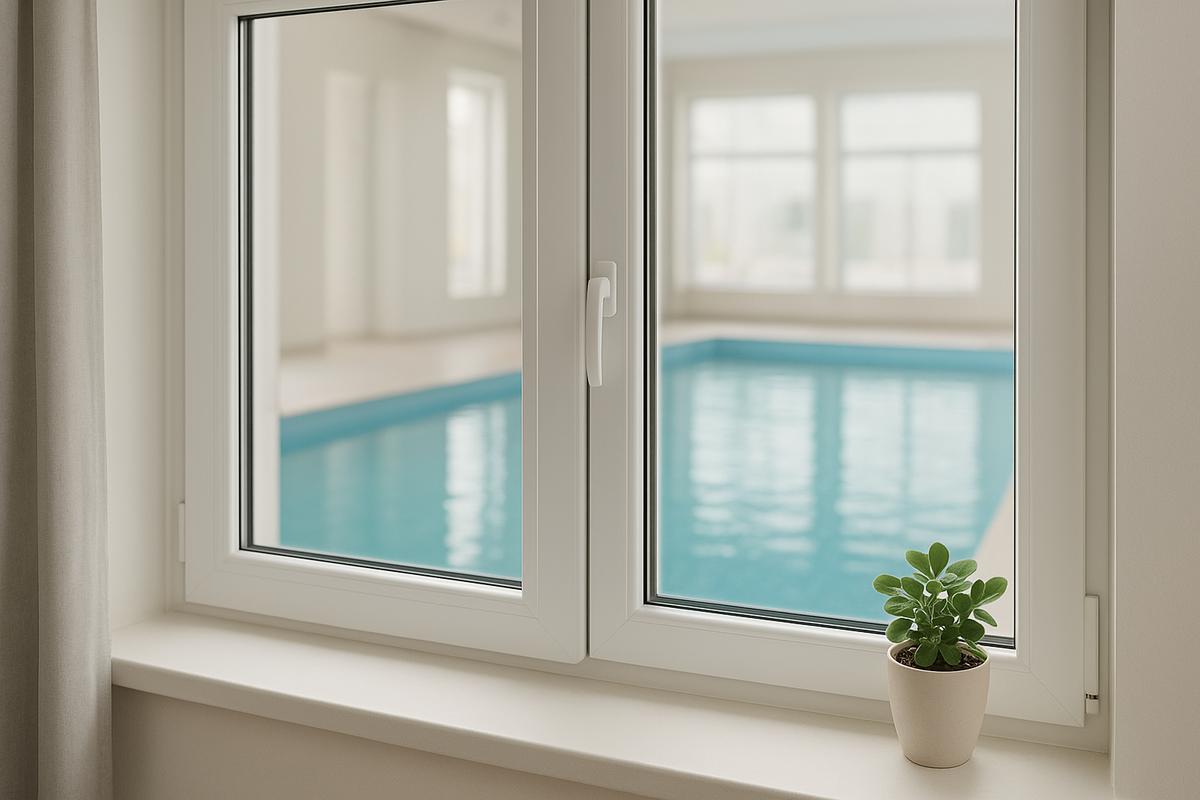
Which glazing units to choose for swimming pools
Why the choice of glazing matters for swimming pools
Swimming pools create a demanding environment for windows: elevated humidity, chlorine vapors and warm air accelerate corrosion of metal components, degrade seals and promote internal condensation. Choosing the right glazing unit ensures longevity, safety and fewer maintenance issues.
Main challenges around pool glazing
- High relative humidity and frequent temperature fluctuations.
- Chlorine and salt vapors that attack metal spacers and fasteners.
- Increased risk of inter-pane condensation and seal failure.
- Safety requirements in public pool facilities.
Glazing unit types suitable for pool areas
1. Laminated and tempered glass (Triplex / Tempered)
- Laminated glass keeps fragments bonded if broken — important for safety in areas with people.
- Tempered glass is stronger and crumbles into small blunt fragments if it fails.
- A combination (tempered outer pane and laminated inner pane) is often optimal.
2. Double or triple glazing with inert gas fill
- Argon (or krypton in narrow cavities) improves thermal performance and reduces condensation risk.
- Triple glazing gives better thermal and acoustic insulation for larger façades but increases weight and frame requirements.
3. Low-emissivity (Low-E) coatings
- Help control heat transfer and solar gain, reducing the likelihood of internal condensation.
- Choose coatings rated for humid environments to avoid degradation.
4. Warm-edge spacers and corrosion-resistant frames
- Aluminum spacers corrode faster in chlorinated environments. Prefer warm-edge thermoplastic or stainless-steel spacers resistant to chlorine vapors.
- Warm-edge spacers reduce cold bridges around the glass perimeter and lower fogging risk.
5. Robust sealing and desiccant
- Desiccants must be suitable for high-humidity conditions to keep the inter-pane cavity dry.
- Multi-layer sealing systems (butyl + polysulfide or structural silicone) extend durability in aggressive environments.
Design and installation recommendations
- Use PVC frames with high-quality seals resistant to moisture and chemical exposure.
- Fasteners and hardware should be corrosion-resistant (A4/AISI 316 stainless steel) or polymer-based.
- Proper ventilation and dehumidification are essential to reduce humidity load on glazing units.
- Plan for serviceability: replaceable panes and accessible seals simplify maintenance.
Maintenance guidance
- Clean with mild detergents; avoid chlorine-based or acidic cleaners that damage seals and coatings.
- Inspect seals and silicones every 1–3 years depending on exposure.
- If you notice inter-pane fogging, consult specialists — it signals seal failure and requires repair.
Frequently Asked Questions
Q: Is double or triple glazing better for a pool area?
A: For small indoor pools, a high-quality double glazed unit with argon and warm-edge spacer is usually sufficient. For large halls or exterior façades, triple glazing improves thermal and sound insulation.
Q: Do I need corrosion-resistant hardware?
A: Yes. All exposed fasteners and elements near the pool should be stainless steel grade AISI 316 or durable polymer to resist chlorine vapors.
Q: How to prevent condensation on pool windows?
A: Combine Low-E coatings, warm-edge spacers, inert gas fill and proper ventilation to maintain surface temperatures above dew point.
Q: Are standard aluminum spacers acceptable?
A: Aluminum spacers are prone to corrosion in chlorinated environments. Use warm-edge or stainless alternatives for longer life.
Q: How important is professional installation?
A: Very important. Incorrect installation or poor sealing will negate the benefits of high-quality glazing.
Conclusion
Selecting glazing for pool areas means balancing safety, corrosion resistance and thermal performance. The best results come from tempered/laminated combinations, warm-edge spacers, reliable seals and a well-ventilated pool room, all installed by professionals.
DK-Logi blog topics and categories
Useful articles about PVC windows, blinds, and practical advice for your home.

GET A FREE WINDOW COST ESTIMATE!
Leave a request, and we will contact you to arrange a free measurement and provide a full cost estimate.
Your name
Your phone number *
Your e-mail
File
Choose file
Comment (e.g., window sizes, quantity, preferred profiles)
2025 © All rights reserved